


用於AI交易策略的即時頭肩頂形態偵測
本文探討如何利用卷積神經網路(CNN)即時偵測金融市場中的頭肩頂圖表形態。作者建議將此形態識別作為AI交易策略的風險控制信號,而非直接的交易信號。

Real-Time Head-and-Shoulders Pattern Detection for AI Trading Strategies
Table of Contents
📌 Originally published on Towards AI:
  Real-Time Head-and-Shoulders Pattern Detection for AI Trading Strategies
.
Every trader knows the Head-and-Shoulders pattern. Few can detect it in real-time without looking at charts. In this article, I’ll show you how a simple CNN can identify this reversal pattern with 97% accuracy — and more importantly, how to use it as a risk control signal rather than a trading signal.
I recently co-authored the book Hands-On AI Trading with Python, QuantConnect, and AWS (Wiley, 2025). It’s a hands-on guide bridging AI and quantitative trading, with fully implemented strategies you can run, audit, and extend — the code is available in the book’s GitHub repository.
In this article, I’ll introduce the breadth of strategies in the book and then go deep on one specific example: a CNN-based chart pattern recognition model for the Head-and-Shoulders reversal pattern. The goal is to take the “offline demo” version and upgrade it into a live, streaming inference pipeline that acts as a tactical overlay for portfolio allocation.
What’s in the Book: A Catalog of AI Trading Strategies
The book is intentionally practical designed to teach intuition:
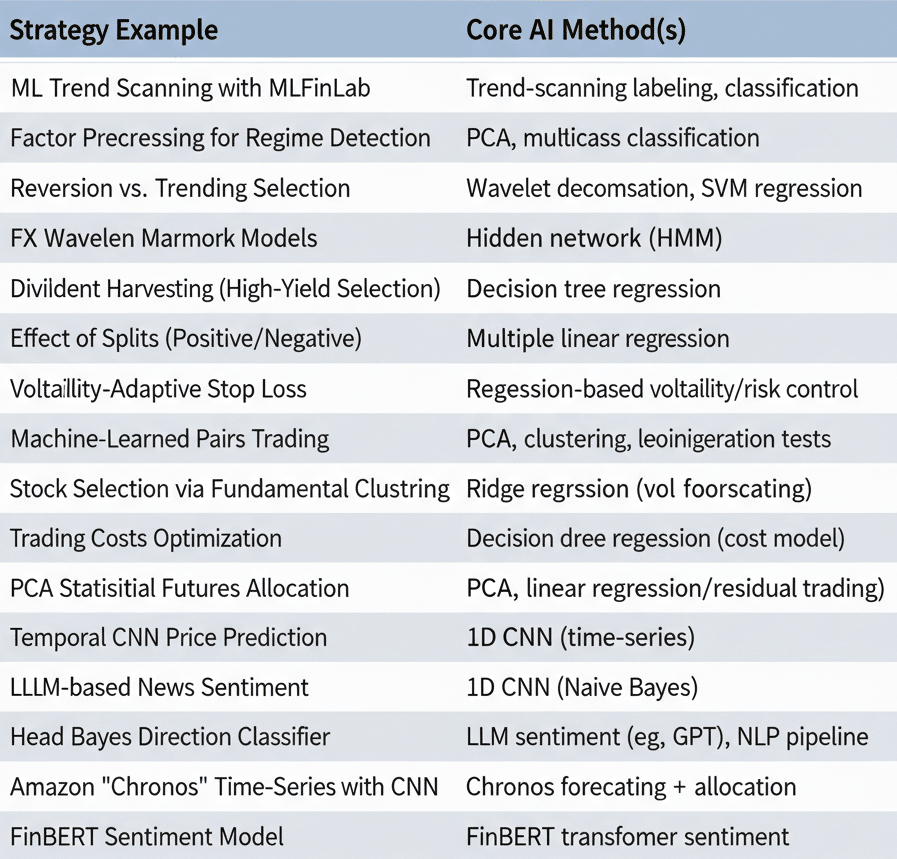
Here’s the complete list of strategy examples and the primary method(s) used in each:
Why Head-and-Shoulders + CNN Is Worth Your Time
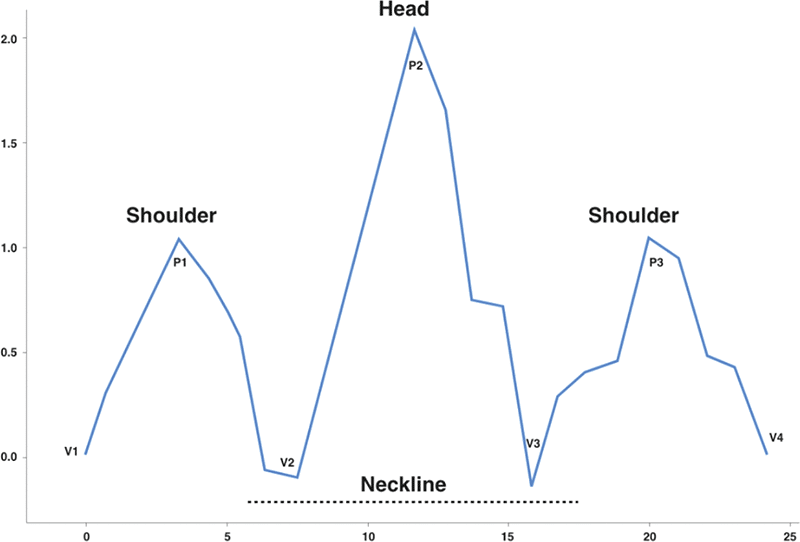
The Head-and-Shoulders top is a classic reversal shape:
The problem in systematic trading is that hand-coded pattern rules are brittle:
A CNN can learn shape invariances directly from the data: relative peak geometry, local slope, symmetry, and “neckline-ish” structure.
In the book, the model is trained primarily on synthetic examples (to get enough labeled positives) and then deployed as a classifier.
This article upgrades that into something closer to production:
Design: CNN as a Tactical Overlay (Not a Standalone Strategy)
In my experience, pattern detectors are most useful when they modify an existing alpha, rather than trying to trade the detector directly.
Examples of overlay behaviors:
In other words: the CNN outputs a probability, and we convert it into a risk control signal.
A Practical Overlay Rule
Let:
Define a gating multiplier:
Then the final allocation becomes:
Interpretation:
You can also add persistence:
Complete Code: Train + Stream Inference + Overlay
This is a self-contained PyTorch implementation that includes:
Sample output:
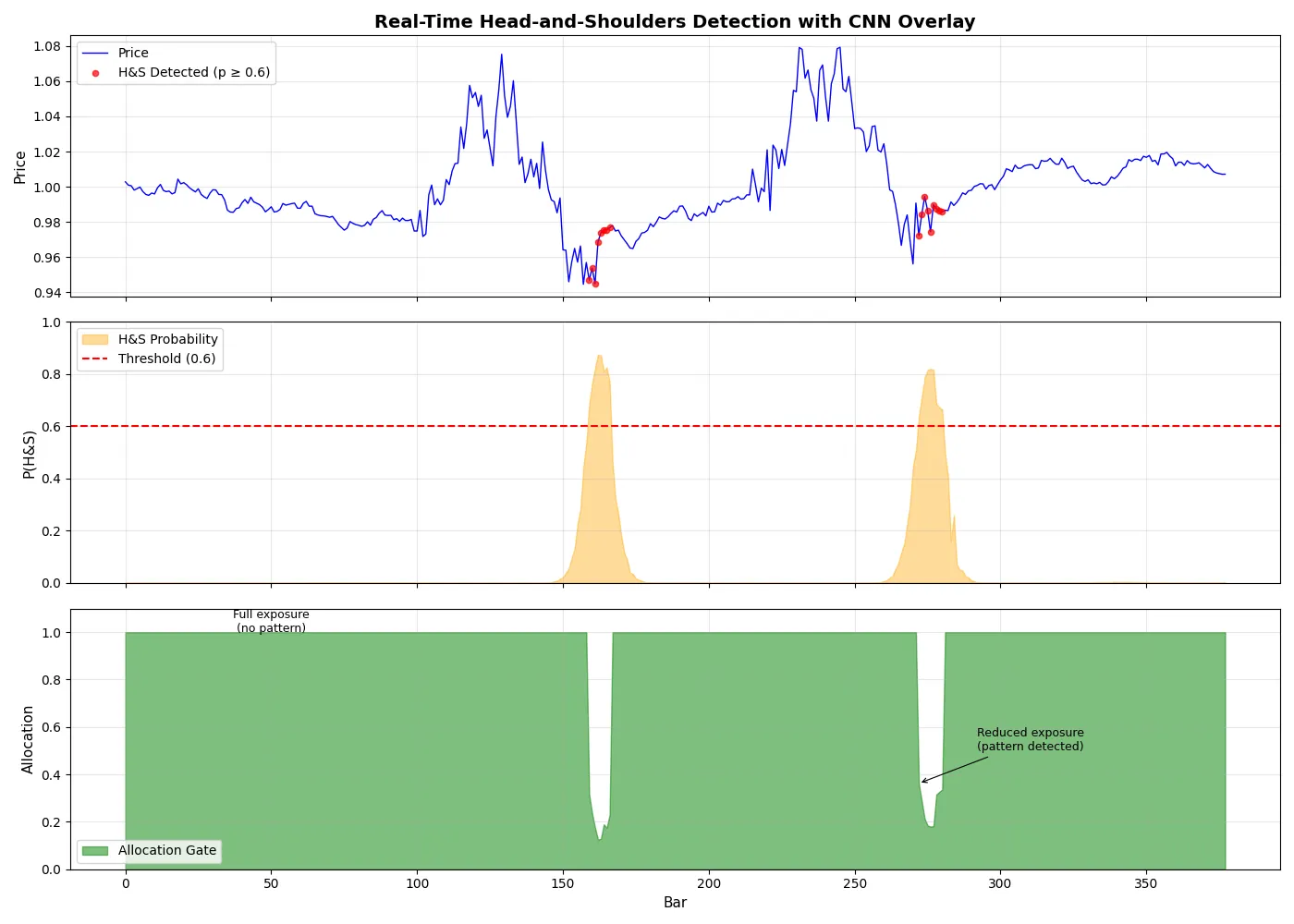
How to Use This in a Trading System
Implementation pattern:
Practical Tips That Matter in Production
Key Takeaways:
Closing
A CNN pattern detector becomes genuinely useful when you treat it as a risk-aware overlay rather than a standalone “pattern trading strategy.” The payoff is usually not raw return, but better drawdown behavior and fewer catastrophic entries during structural reversals.
If you want to explore the full set of AI trading strategies from the book, the code is in: https://github.com/QuantConnect/HandsOnAITradingBook
And the book is here: https://amzn.to/4fI0hkU
Author

Copyright © Jiri Pik, 1996 – 2026
Table of Contents
相關文章
其他收藏 · 0