
您的AI策略是否僅取決於您的團隊原型?
2025年DORA AI輔助軟體開發報告提出七種團隊原型,超越單純指標,以更全面地診斷團隊健康狀況,並連結軟體交付績效、產品成果與團隊福祉。


Is Your AI Strategy Only as Good as Your Team Archetype?
DORA's shift from tiers to types

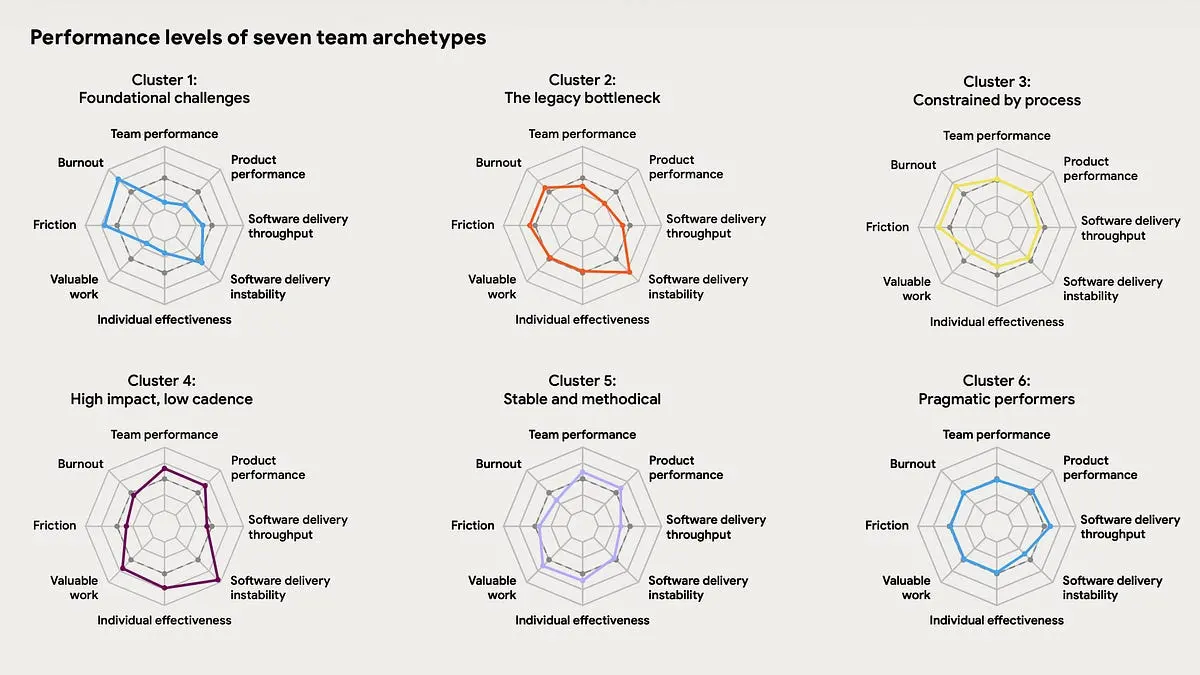
The 2025 DORA State of AI-Assisted Software Development report identifies seven team archetypes through cluster analysis, linking software delivery performance, stability, product outcomes, and team well-being. These replace the previous low/medium/high/elite classifications and help diagnose team health by creating avatars that capture common characteristics.
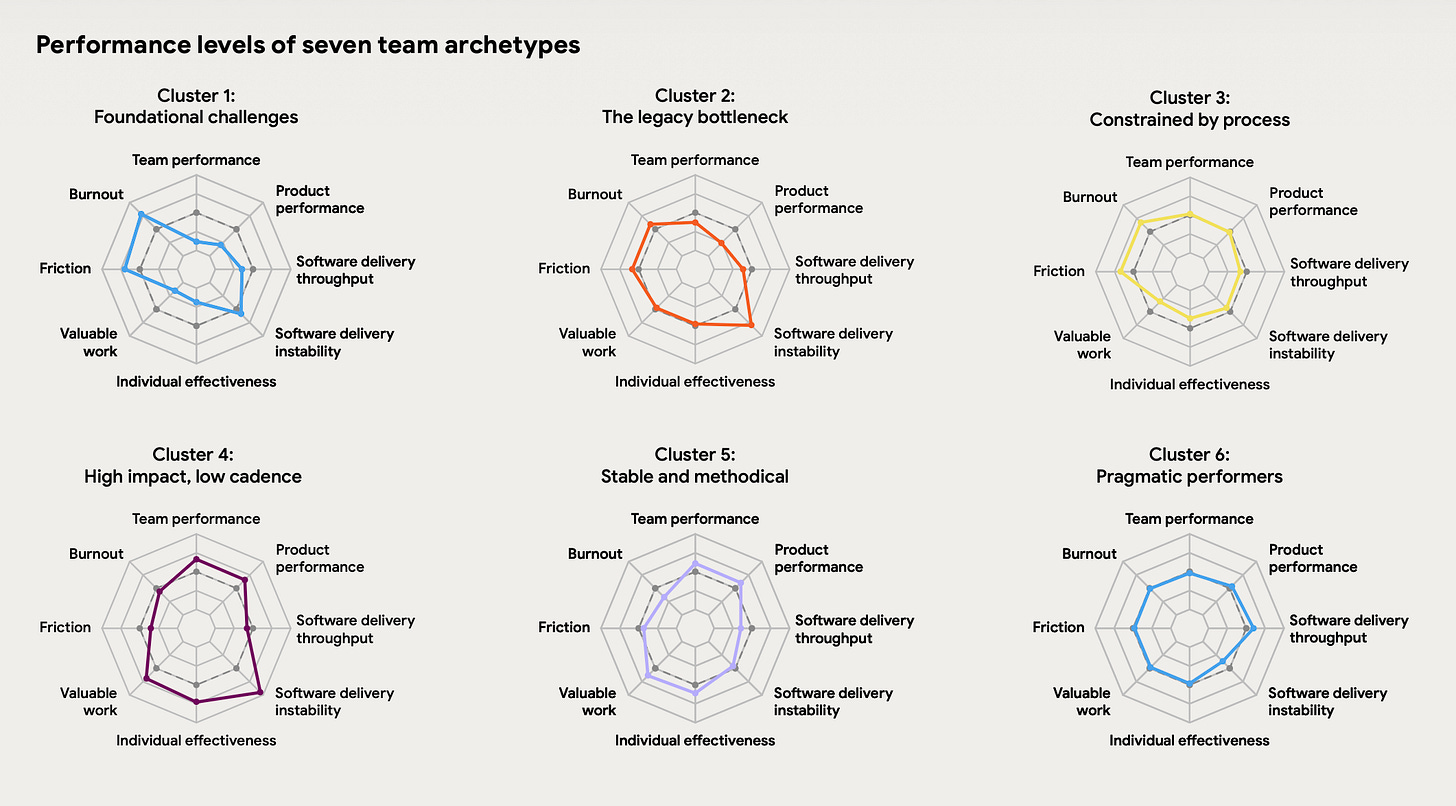
Instead of aggregating teams into those four broad categories based purely on throughput and stability metrics, the 2025 research identifies seven distinct team profiles (or archetypes) through cluster analysis. Teams may be characterized by “Foundational challenges” (survival mode with process gaps, high burnout) or as “Harmonious high-achievers” (excelling in well-being, delivery, and outcomes).
2025’s DORA report highlights that we have to look beyond simple metrics to understand performance, and that downstream results don’t tell us much about upstream conditions.
"Simple metrics are not enough. We identified seven distinct team profiles, each with a unique combination of performance, stability, and well-being. This model provides a nuanced way to understand your teams’ specific challenges and create tailored pathways for improvement"
What I like about these archetypes is that they zoom to the appropriate level for putting DORA’s data and recommendations to use. Organizations are not best understood or improved as monoliths, and the highest balance of impact and autonomy is the team, so I think it’s a great idea to profile teams rather than organizations. It allows us to understand performance where we can most quickly impact it.
"This approach moves beyond isolated numbers to reveal seven common team profiles, each telling a deeper story about the interplay between performance, well-being, and environment"
So that begs the question: Which type are you in right now?
1. Foundational Challenges (10%)
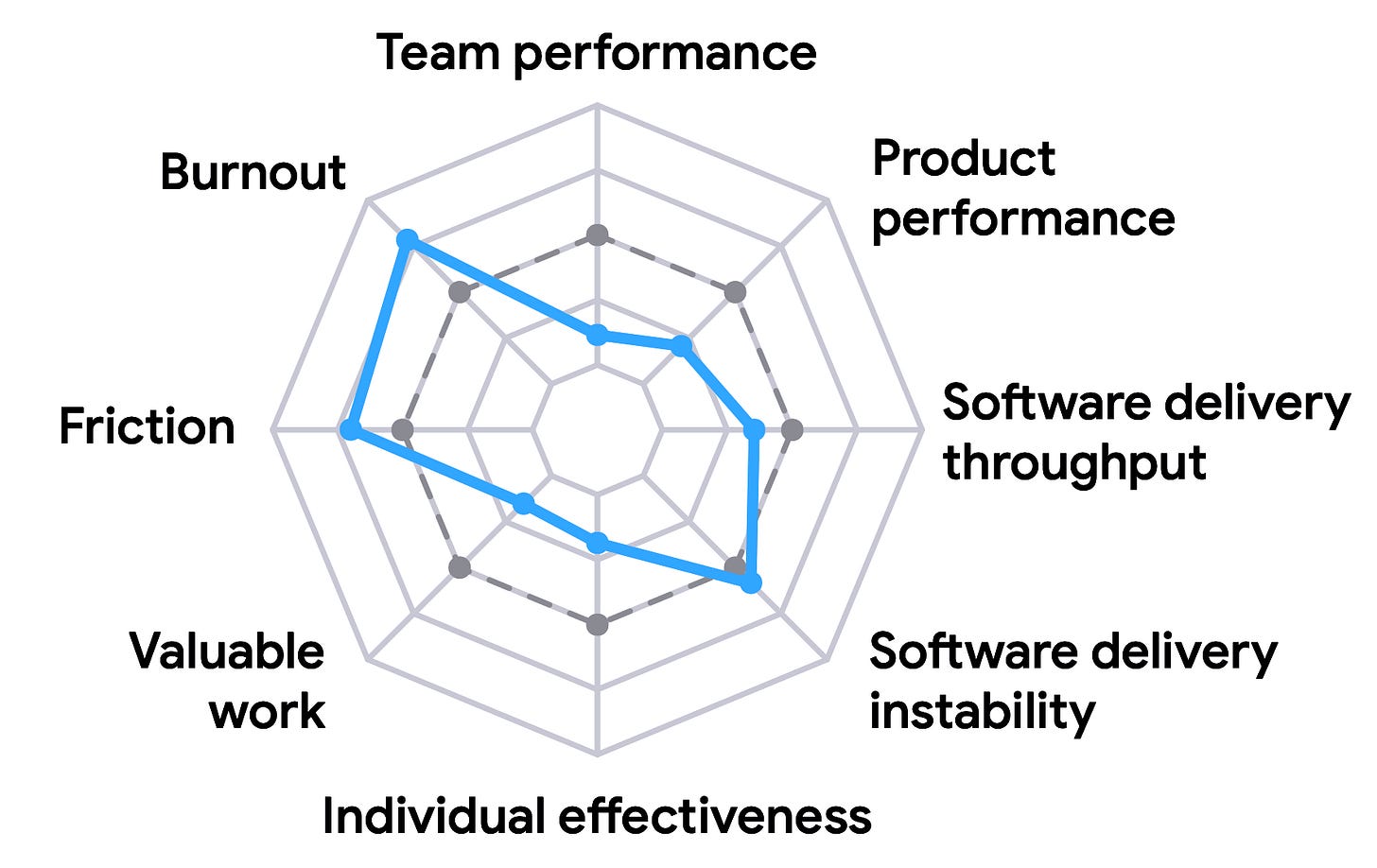
These teams are stuck in survival mode. They face significant gaps in processes, environment, and outcomes, with consistently low performance and high levels of burnout and friction. AI likely represents yet another capability they can’t leverage, but they may get distracted and disheartened by trying.
2. The Legacy Bottleneck (11%)
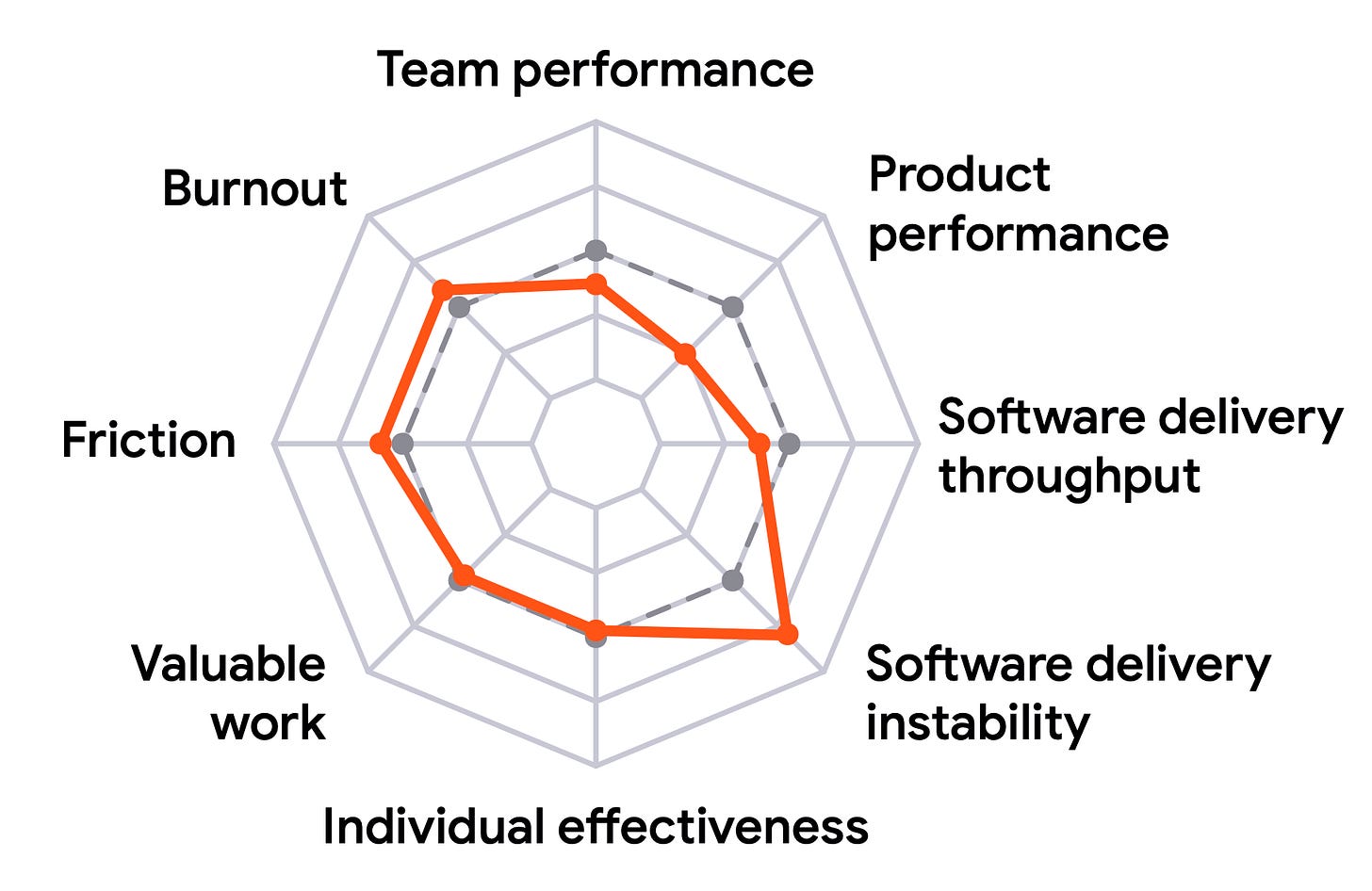
Teams here are in a constant state of reaction. Unstable systems interrupt their work and undermine their morale. The data shows significant challenges with software stability and a high volume of unplanned, reactive work. For these teams, AI isn’t an amplifier of value; it’s more likely a source of more downstream chaos.
3. Constrained by Process (17%)
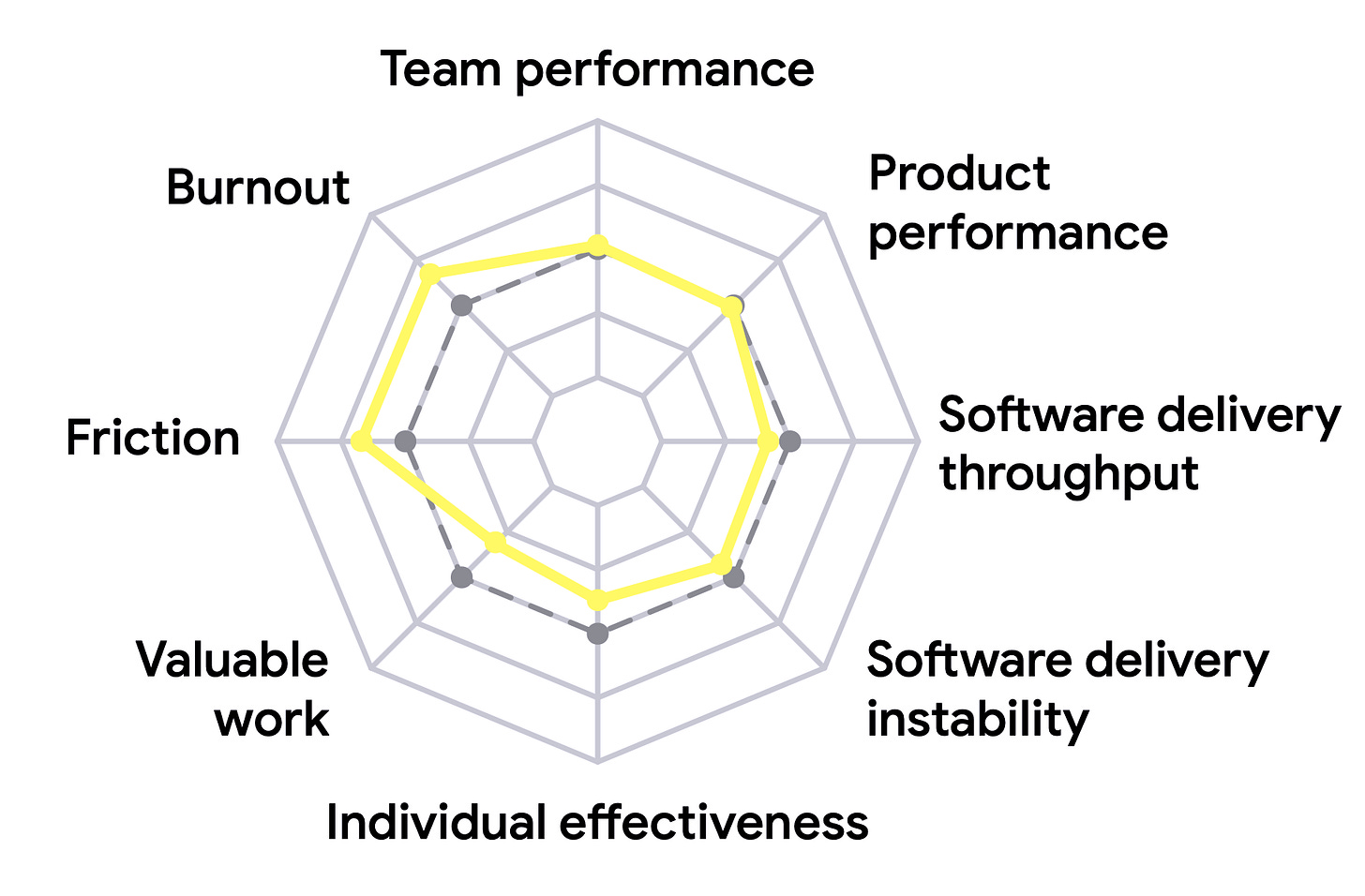
These teams are running on a treadmill. Despite having stable systems, their effort is eaten up by inefficient processes, leading to high burnout and low impact. This is where the value of Value Stream Management (VSM) is most needed. If you apply AI here just to generate more code, you aren’t solving the problem; you’re just exacerbating the process bottleneck.
4. High Impact, Low Cadence (7%)
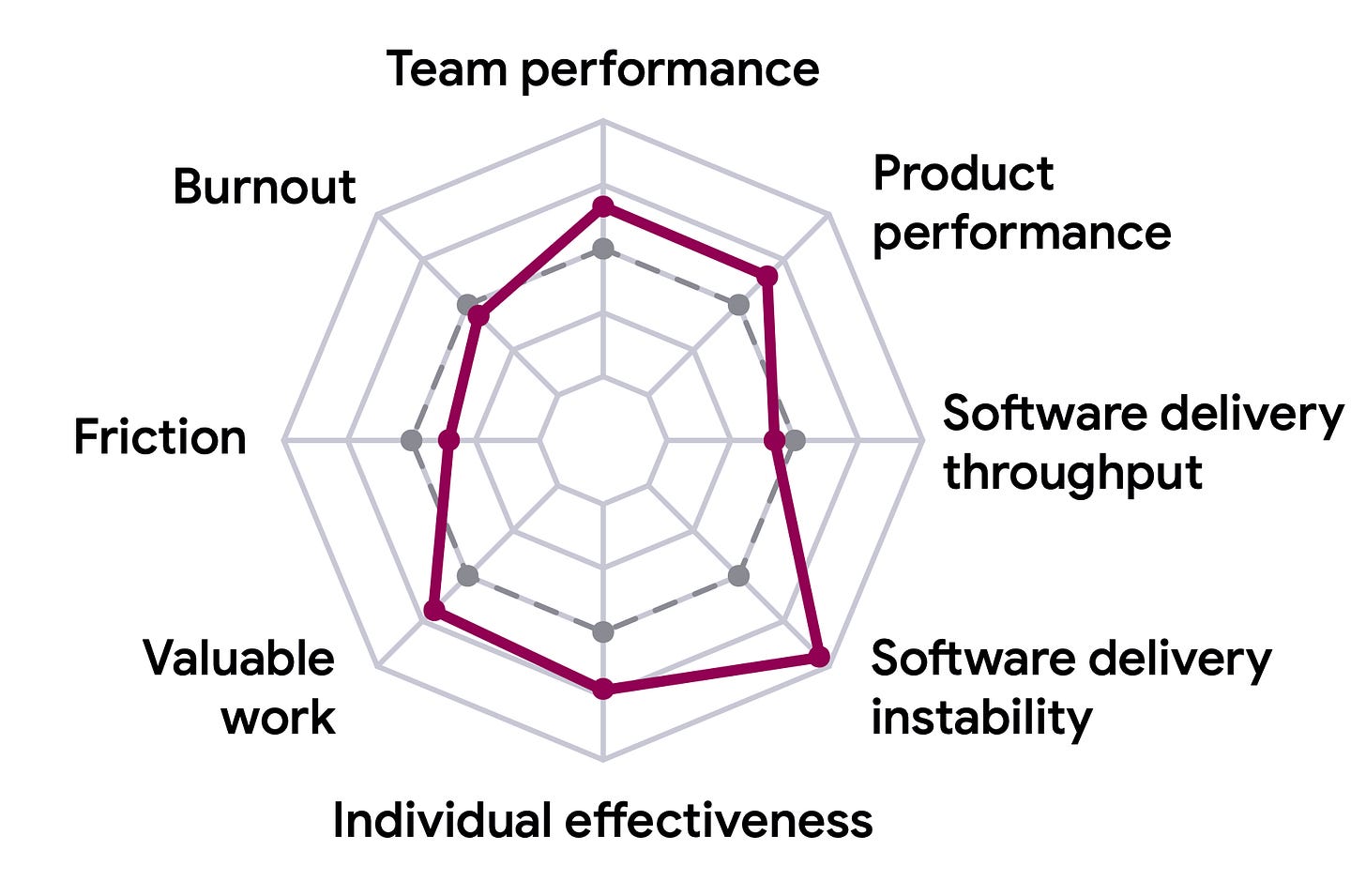
This is the danger zone. These teams produce high-impact work and feel effective, but they are trapped in a low-cadence model with high instability. Speed without stability is a dangerous and unsustainable proposition. Without the right safety nets—like platform automation and small batches—AI in this environment will only accelerate the next outage.
5. The Stable and Methodical (15%)
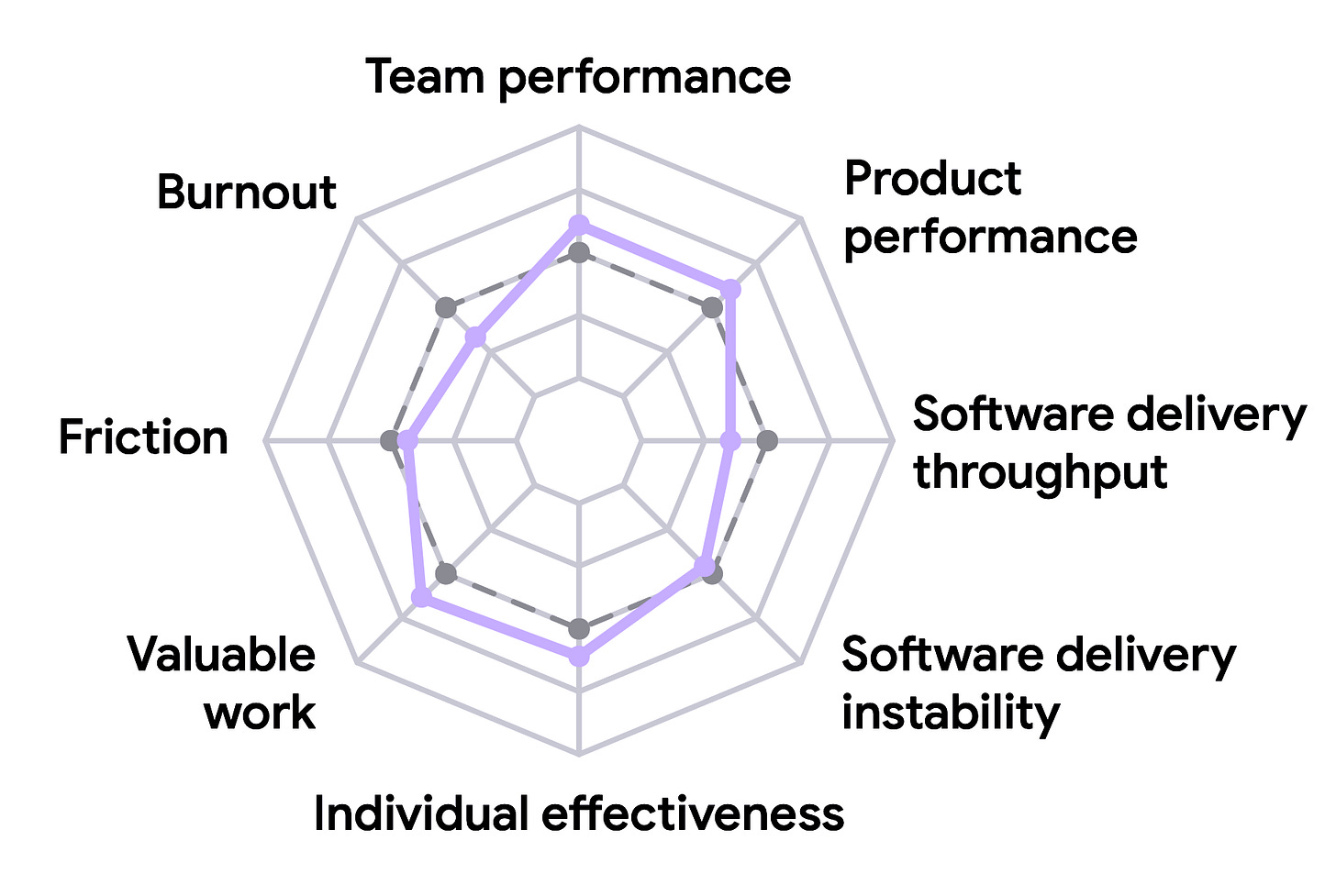
These are the steady artisans of the software world. They deliver high-quality, valuable work at a deliberate and sustainable pace. While their throughput is lower, their stability is high. For these teams, AI serves to reinforce their craftsmanship rather than just rushing the process. They have opportunities to accelerate quality delivery via AI.
6. The Pragmatic Performer (20%)
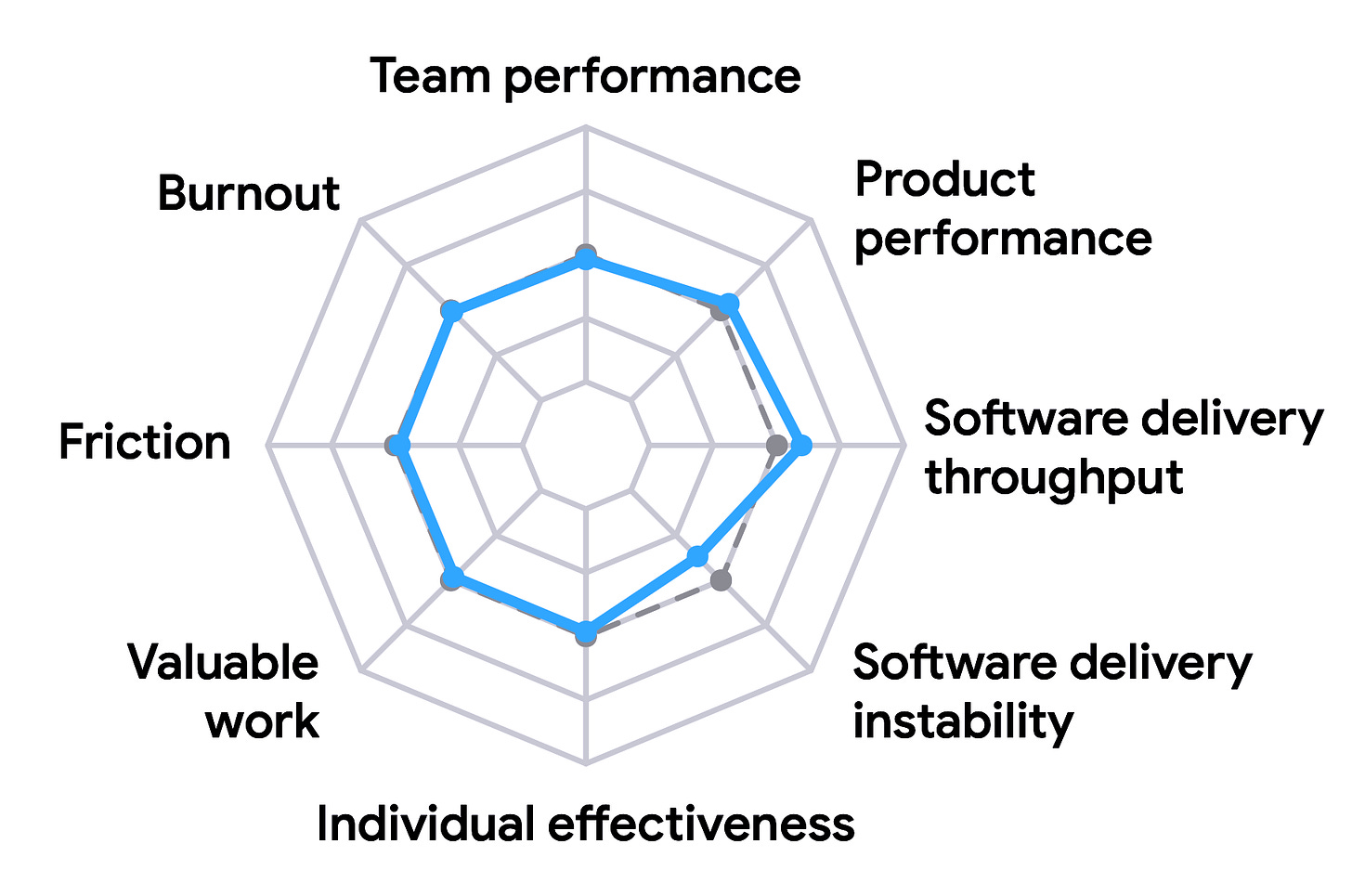
Like the high-achievers, these teams deliver work with impressive speed and stability. Where they differ is engagement; their work environment is functional and sustainable but may lack the deep “human spark” or engagement drivers of the top tier. AI here is an engine for efficiency, maintaining a steady cadence of valuable output.
7. The Harmonious High-Achiever (20%)
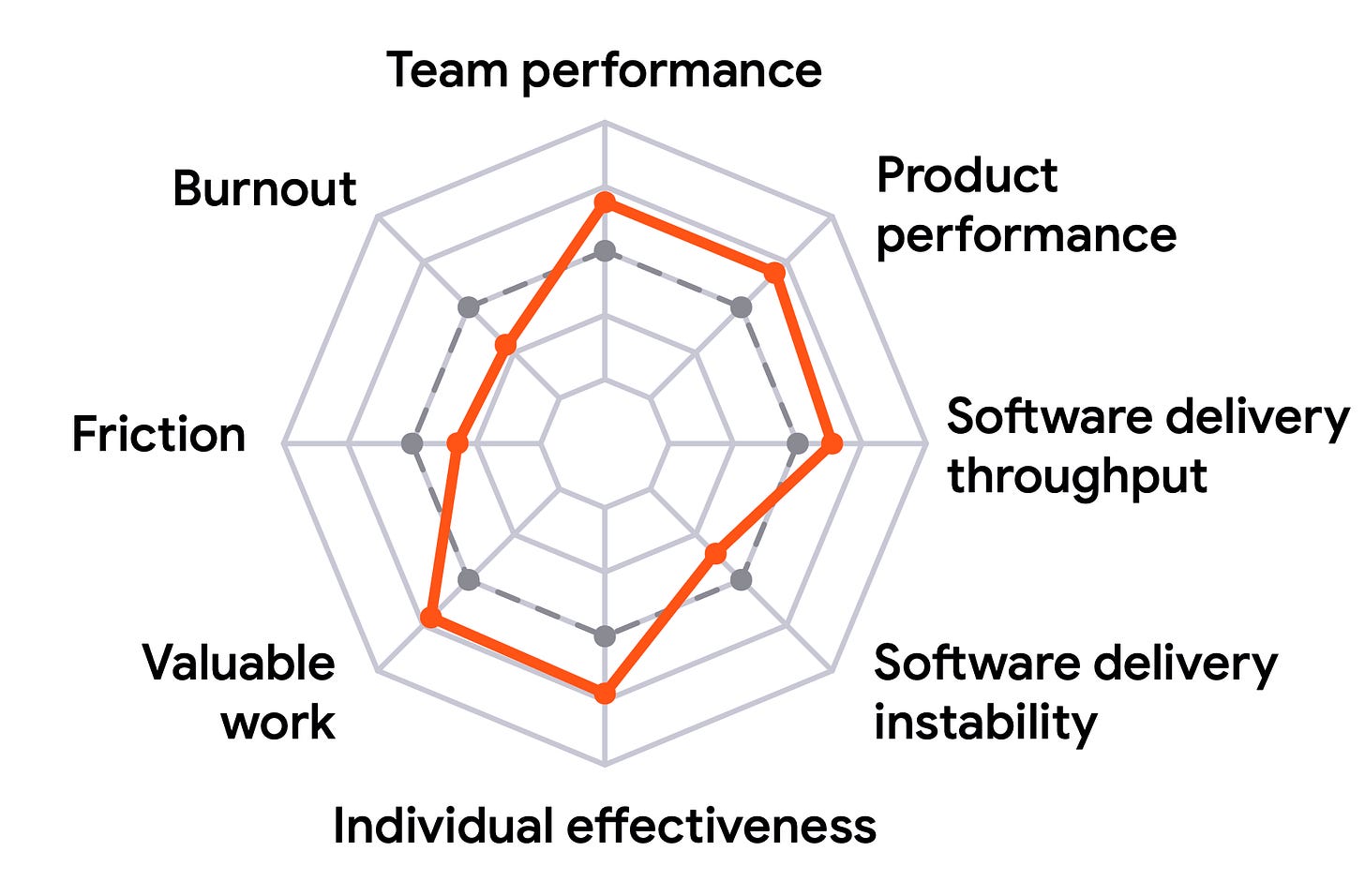
This is what excellence looks like—a virtuous cycle where a stable, low-friction environment empowers teams to deliver high-quality work sustainably and without burnout. These teams show positive metrics across the board, from well-being to product outcomes. In this environment, AI isn’t just a tool; it’s a seamless part of a high-velocity, high-quality reality.
Start Where You Are
The 2025 DORA is a step towards a more nuanced conversation about performance and assessment, but averages lie, and context is king. By moving away from the blunt instrument of Elite vs. Low comparisons and toward these seven archetypes, we have a new data model that more closely reflects the reality of software delivery in real organizations, at an effective level of granularity. Organizations are not monoliths; they are ecosystems of distinct teams, each facing unique constraints—from the Foundational Challenges of survival mode to the Harmonious High-Achievers.
Ultimately, this research serves as a critical reminder that you cannot fix upstream friction with downstream metrics. Whether a team is constrained by process or trapped in a legacy bottleneck, the path to improvement isn’t about blindly chasing higher throughput. It is about diagnosing the specific profile of the team, understanding the interplay between well-being and stability, and designing a custom roadmap to remove the impediments to flow.
Key Takeaways
Granularity Over Generalization: The shift from four performance levels to seven clustered archetypes proves that simple metrics regarding speed and stability are insufficient for diagnosing team health. Measuring the interaction between performance, environment, and well-being gives us a deeper understanding.
AI is an Accelerator, Not a Fix: For teams in the “Harmonious” or “Pragmatic” clusters, AI amplifies value. For those in “Legacy Bottlenecks” or “Foundational Challenges,” AI merely accelerates chaos and technical debt. You cannot automate your way out of a broken process.
The Team is the Unit of Change: High-level organizational metrics obscure pockets of high friction. To improve organizational performance, you must zoom in to the team level, identify their specific archetype, and grant them the autonomy to solve their unique constraints.
Don’t Guess Your Archetype—Map It
Are your teams truly “Harmonious High-Achievers,” or are they “Constrained by Process” and burning out while trying to look the part? Blindly adopting AI tools or standardized agile frameworks without knowing your starting point is a recipe for waste.
If you are ready to move beyond vanity metrics and understand the real friction points slowing your organization down, you need to understand how your teams actually perform with the work they do today. Use Flow Engineering to diagnose your archetype, map your value stream, and target the specific bottlenecks preventing your teams from reaching a state of AI-enabled flow.


Hey Steve, excellent article. Nuance matters a lot.
No posts
Ready for more?
相關文章