

變形分子:超越矽的未來AI硬體
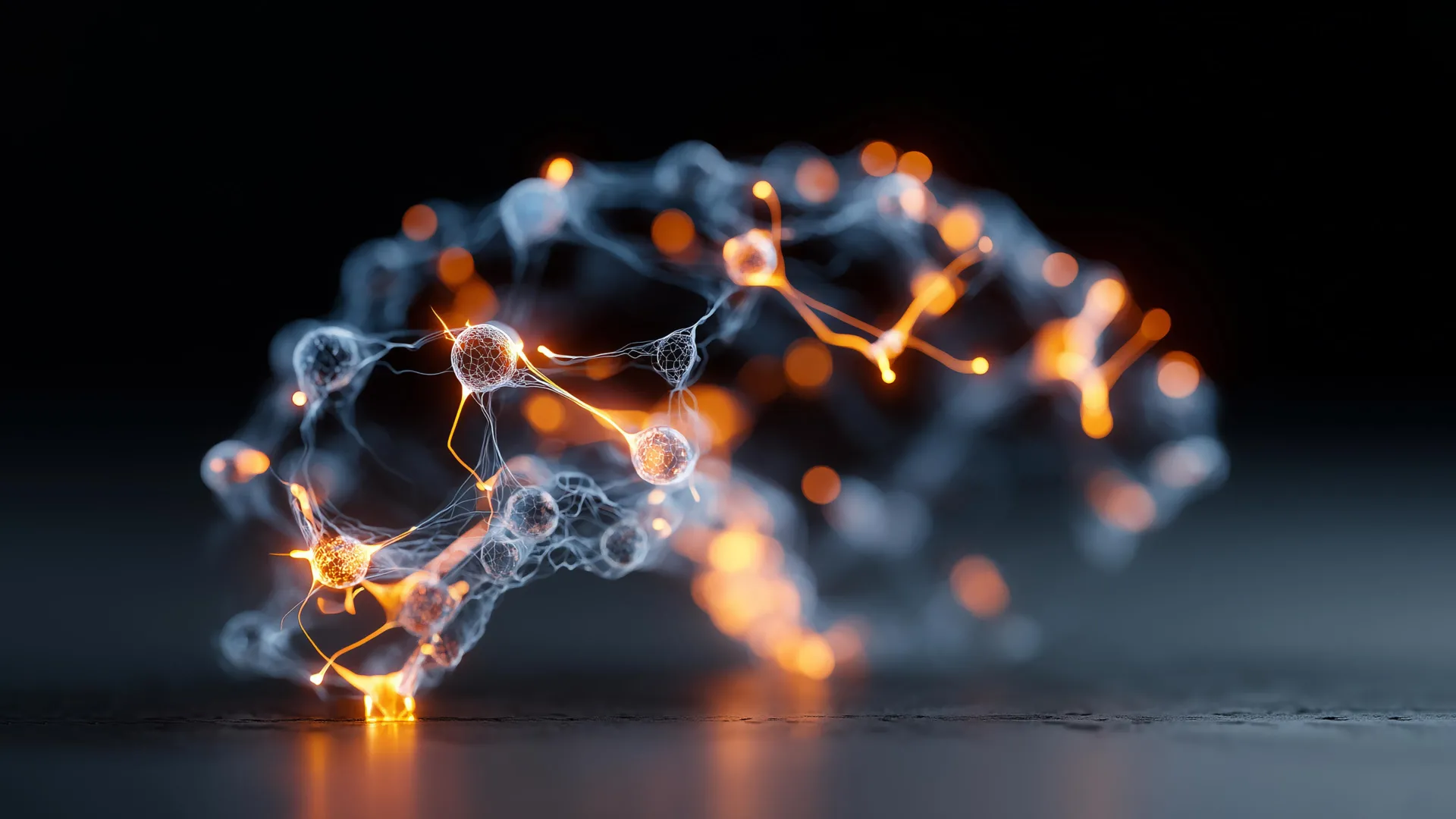
研究人員正探索變形分子作為超越矽的AI硬體潛在替代方案,目標是創造能自然地在同一結構中儲存資訊、進行運算並適應的裝置,結合了分子電子學與神經形態運算的領域。

Beyond silicon: These shape-shifting molecules could be the future of AI hardware
For more than 50 years, scientists have searched for alternatives to silicon as the foundation of electronic devices built from molecules. While the concept was appealing, practical progress proved far more difficult. Inside real devices, molecules do not behave like simple, isolated components. Instead, they interact intensely with one another as electrons move, ions shift, interfaces change, and even tiny differences in structure can trigger highly nonlinear responses. Although the potential of molecular electronics was clear, reliably predicting and controlling their behavior remained out of reach.
At the same time, neuromorphic computing, hardware inspired by the brain, has pursued a similar goal. The aim is to find a material that can store information, perform computation, and adapt within the same physical structure and do so in real time. However, today's leading neuromorphic systems, often based on oxide materials and filamentary switching, still function like carefully engineered machines that imitate learning rather than materials that naturally contain it.
Two Paths Begin to Converge
A new study from the Indian Institute of Science (IISc) suggests these two long-standing efforts may finally be coming together.
In a collaboration bringing together chemistry, physics, and electrical engineering, a team led by Sreetosh Goswami, Assistant Professor at the Centre for Nano Science and Engineering (CeNSE), developed tiny molecular devices whose behavior can be tuned in multiple ways. Depending on how they are stimulated, the same device can act as a memory element, a logic gate, a selector, an analog processor, or an electronic synapse. "It is rare to see adaptability at this level in electronic materials," says Sreetosh Goswami. "Here, chemical design meets computation, not as an analogy, but as a working principle."
How Chemistry Enables Multiple Functions
This flexibility comes from the specific chemistry used to construct and adjust the devices. The researchers synthesized 17 carefully designed ruthenium complexes and studied how small changes in molecular shape and the surrounding ionic environment influence electron behavior. By adjusting the ligands and ions arranged around the ruthenium molecules, they demonstrated that a single device can display many different dynamic responses. These include shifts between digital and analog operation across a wide range of conductance values.
The molecular synthesis was carried out by Pradip Ghosh, Ramanujan Fellow, and Santi Prasad Rath, former PhD student at CeNSE. Device fabrication was led by Pallavi Gaur, first author and PhD student at CeNSE. "What surprised me was how much versatility was hidden in the same system," says Gaur. "With the right molecular chemistry and environment, a single device can store information, compute with it, or even learn and unlearn. That's not something you expect from solid-state electronics."
A Theory That Explains and Predicts Behavior
To understand why these devices behave this way, the team needed something that has often been missing in molecular electronics: a solid theoretical framework. They developed a transport model based on many-body physics and quantum chemistry that can predict device behavior directly from molecular structure. Using this framework, the researchers traced how electrons move through the molecular film, how individual molecules undergo oxidation and reduction, and how counterions shift within the molecular matrix. Together, these processes determine switching behavior, relaxation dynamics, and the stability of each molecular state.
Toward Learning Built Into Materials
The key result is that the unusual adaptability of these complexes makes it possible to combine memory and computation within the same material. This opens the door to neuromorphic hardware in which learning is encoded directly into the material itself. The team is already working to integrate these molecular systems onto silicon chips, with the goal of creating future AI hardware that is both energy efficient and inherently intelligent.
"This work shows that chemistry can be an architect of computation, not just its supplier," says Sreebrata Goswami, Visiting Scientist at CeNSE and co-author on the study who led the chemical design.
Story Source:
Materials provided by Indian Institute of Science (IISc). Note: Content may be edited for style and length.
Journal Reference:
Cite This Page:
Explore More
This Quantum Material Breaks the Rules – and Reveals New Physics
This Robot Learned to Talk by Watching Humans on YouTube
Mystery Solved? Fast Radio Bursts Linked to Orbiting Stellar Companions
Scientists Discover the Body’s Natural “Off Switch” for Inflammation
Breaking
Trending Topics
Strange & Offbeat
Stay informed with ScienceDaily's free email newsletter, updated daily and weekly. Or view our many newsfeeds in your RSS reader:
Keep up to date with the latest news from ScienceDaily via social networks:
Tell us what you think of ScienceDaily -- we welcome both positive and negative comments. Have any problems using the site? Questions?
相關文章
其他收藏 · 0