

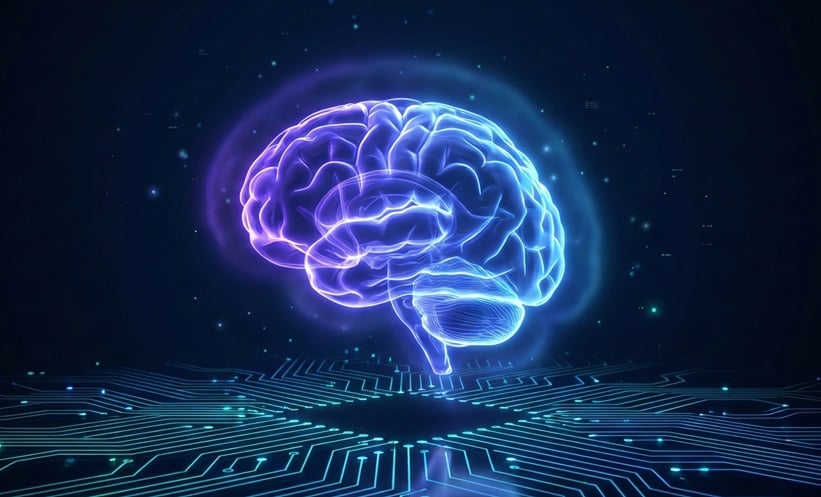
AI運用腦電圖提升早期失智症辨識
透過AI分析常規腦電圖(EEG)掃描,現已能區分阿茲海默症與額顳葉失智症,並估計疾病嚴重程度,提供更快速且經濟實惠的診斷途徑。
Join
This site is intended for healthcare professionals


Join
AI Improves Early Dementia Identification with EEG
AI powered analysis of routine EEG scans is now distinguishing Alzheimer’s disease from frontotemporal dementia while also estimating disease severity, offering faster and more affordable pathways to diagnosis.
Why EEG And AI Matter for Dementia Care
Alzheimer’s disease and frontotemporal dementia are the two most common causes of dementia, yet they frequently present with overlapping symptoms that make accurate diagnosis difficult in early stages. Misclassification can delay appropriate treatment, distort prognosis, and prevent timely care planning. EEG has long been recognised as a portable and noninvasive test, but its diagnostic value has been limited by similarities in brain activity patterns between dementia subtypes. Recent advances in AI have renewed interest in EEG as a front-line screening tool, opening opportunities for accessible and scalable dementia evaluation in community and specialist settings.
EEG Feature Analysis Using AI Delivers Strong Accuracy
Researchers developed a deep learning framework that combined a Convolutional Neural Network with an attention-based Long Short Term Memory network to extract both temporal and spectral EEG features. Slow delta band activity in frontal and central regions emerged as a consistent biomarker across both conditions. The AI system achieved over 90% accuracy in distinguishing Alzheimer’s disease and frontotemporal dementia from cognitively normal individuals. It predicted disease severity with relative errors of less than 35% for Alzheimer’s disease and approximately 15.5% for frontotemporal dementia. Differentiating the two dementias proved more challenging, with initial specificity of 26%, but application of a feature selection procedure improved this to 65%. A two-stage classification approach then enabled simultaneous identification of Alzheimer’s disease, cognitively normal status and frontotemporal dementia, delivering an overall accuracy of 84% in separating the three groups.
Implications For Clinical Practice and Future Use
These findings indicate that AI enhanced EEG assessment could become a valuable front line triage tool for memory services, supporting faster referral decisions and more targeted investigations. By enabling earlier and more precise classification, clinicians may initiate appropriate treatment pathways sooner and personalise care planning. Future validation in routine clinical populations will be critical, but integration of AI driven EEG platforms could reduce reliance on more costly imaging and help expand access to specialist level dementia diagnostics.
Reference
Vo T et al. Extraction and interpretation of EEG features for diagnosis and severity prediction of Alzheimer’s Disease and Frontotemporal dementia using deep learning. Biomedical Signal Processing and Control. 2026;112:108667.
Each article is made available under the terms of the Creative Commons Attribution-Non Commercial 4.0 License.
Rate this content's potential impact on patient outcomes
Average rating / 5. Vote count:
No votes so far! Be the first to rate this content.
Related To This Subject
Electronic Diary Improves Daily GORD Monitoring

GIANT 2025 Interview: Andrew Stradling
More articles

Reinventing Modern Medicine: Interview with Eric Topol

Public Health Leadership: Interview with Ashish K. Jha

Designing Life-Saving Neonatal Incubators: Interview with James Roberts
Featured journals

EMJ Innovations 9 [Supplement 2] 2025

EMJ Innovations 9.1 2025





Therapy Area
About Us

Copyright © 2026 European Medical Group LTD trading as European Medical Journal. All rights reserved. European Medical Journal is for informational purposes and should not be considered medical advice, diagnosis or treatment recommendations.
Ts & Cs
Privacy Policy
Cookie Policy
相關文章