

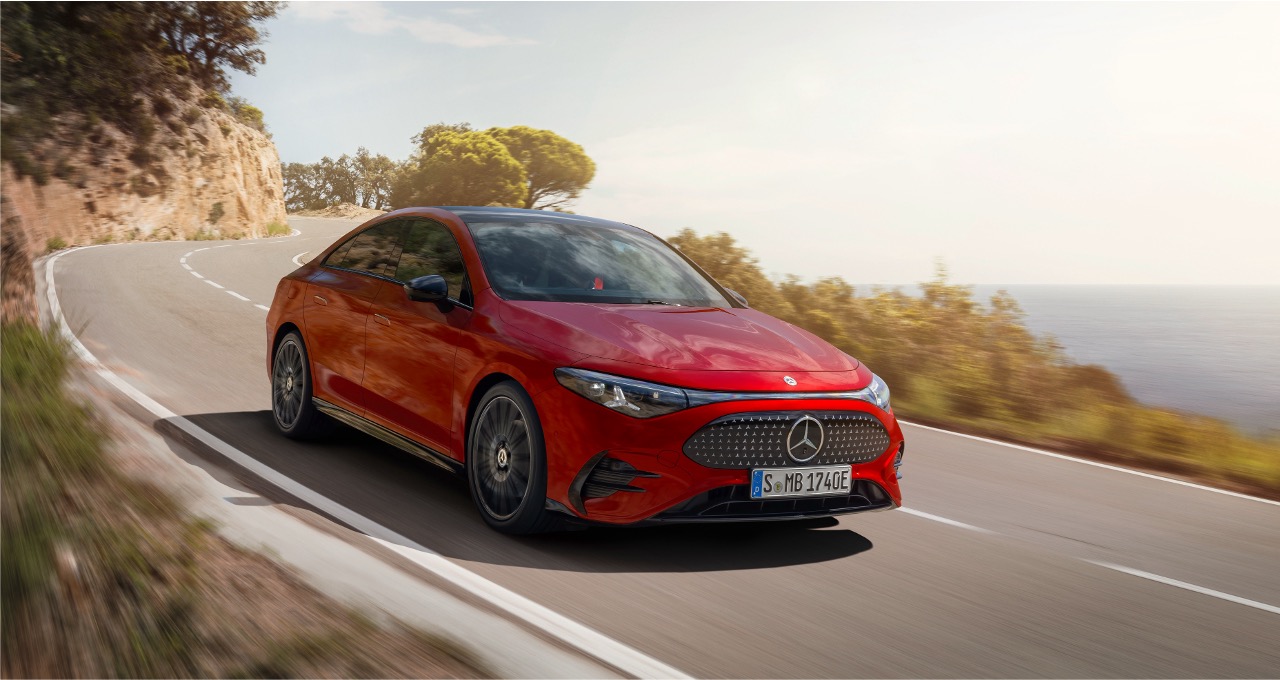
NVIDIA DRIVE AV 提升車輛安全標準,賓士 CLA 榮獲 Euro NCAP 最高獎項
賓士 CLA 憑藉結合 NVIDIA DRIVE AV 軟體與傳統被動安全系統,榮獲 Euro NCAP 2025 年度最佳表現獎,顯示 AI 驅動的駕駛輔助技術在車輛安全評估中的重要性日益提升。
Artificial Intelligence Computing Leadership from NVIDIA

NVIDIA DRIVE AV Raises the Bar for Vehicle Safety as Mercedes-Benz CLA Earns Top Euro NCAP Award
AI-powered driver assistance technologies are becoming standard equipment, fundamentally changing how vehicle safety is assessed and validated.
The recent recognition of the Mercedes-Benz CLA as Euro NCAP’s Best Performer of 2025 underscores this shift, as the vehicle combines traditional passive safety features with NVIDIA DRIVE AV software to achieve the highest overall safety score of the year.
“When Euro NCAP assesses vehicle safety, it evaluates both passive and active systems — achieving a perfect score requires a state-of-the-art advanced driver assistance system,” said Ola Källenius, CEO of the Mercedes-Benz Group. “This milestone represents the culmination of five years of collaboration between Mercedes-Benz and NVIDIA to enhance real-world safety and deliver tangible value to customers.”
Euro NCAP (European New Car Assessment Programme) has for nearly 30 years served as Europe’s independent vehicle safety authority, backed by European governments, motoring organizations and consumer groups.
Euro NCAP evaluates vehicles across four categories that reflect real-world safety. For AI-powered driver assistance, the most relevant are the “Vulnerable Road User” and “Safety Assist” categories, which assess technologies designed to help prevent crashes — including automatic emergency braking, lane-keeping support and speed assistance.
Only vehicles achieving five-star ratings with standard equipment qualify for “Best in Class” recognition, with winners determined by weighted scores across all categories. In 2025, Euro NCAP tested a record 49 models.
Safety Comes First: How DRIVE AV Is Built for Trust
Safety ratings like Euro NCAP are increasingly recognizing vehicles that combine strong passive protection with advanced active safety performance. As AI becomes central to driving, the benchmark for the “safest” car will increasingly be defined not only by how well a vehicle handles a crash, but how effectively it helps prevent one.
The Mercedes-Benz CLA is built with NVIDIA DRIVE AV, a dual-stack architecture that’s designed to help automakers deliver systems that aren’t only intelligent, but predictable, verifiable and resilient in the real world. The architecture pairs an AI-driven end-to-end driving system with a parallel classical safety stack to provide redundancy across AV sensing, planning and execution.
The CLA is also built on the NVIDIA DRIVE Hyperion architecture, which incorporates sensor diversity and hardware redundancy into the vehicle’s overall design.
At the heart of this approach is NVIDIA Halos — a comprehensive safety system spanning hardware, software, tools, development processes and certification support. Halos delivers a structured safety foundation for developing automated driving and other AI capabilities while staying anchored to robust guardrails, redundancy and fault tolerance.
Third-party certification and assessments are also important to build trust:
NVIDIA recently released its Alpamayo family of open AI models, simulation tools and datasets — which enables AVs to navigate even rare, “long-tail” events they haven’t been trained on by breaking the scenario down into smaller steps, reasoning through multiple possible actions and ultimately selecting the safest one. Using these models with the parallel classical safety stack in the NVIDIA DRIVE AV dual-stack architecture provides an additional layer of protection to keep vehicles operating within safe boundaries.
Training Safety Through Data and Simulation
Modern AI-driven safety systems learn from exponentially more driving scenarios than any human could experience in a lifetime. NVIDIA’s cloud-to-car development approach transforms real-world data into billions of simulated miles using NVIDIA DGX systems for neural network training, the NVIDIA Omniverse and Cosmos platforms for simulation, and NVIDIA DRIVE AGX for in-vehicle computing.
This methodology addresses a critical challenge in safety validation: training AI to navigate rare but high-risk edge cases that are too dangerous — or too infrequent — to test reliably in the real world. By generating synthetic scenarios that represent these rare situations, AI systems can learn appropriate responses during development without putting people at risk.
The CLA’s recognition is more than a single model earning a top rating — it reflects a broader shift in what safety means in the modern vehicle, where trusted crash protection is paired with AI-enabled driver assistance designed to help avoid accidents in the first place.
All NVIDIA News

How to Get Started With Visual Generative AI on NVIDIA RTX PCs

From Pilot to Profit: Survey Reveals the Financial Services Industry Is Doubling Down on AI Investment and Open Source
Flight Controls Are Cleared for Takeoff on GeForce NOW

NVIDIA Named Best Place to Work in Tech and AI by Glassdoor

‘Largest Infrastructure Buildout in Human History’: Jensen Huang on AI’s ‘Five-Layer Cake’ at Davos
Corporate Information
Get Involved
News & Events
Share on Mastodon
Friend's Email Address
Your Name
Your Email Address
Comments
Send Email
相關文章