
瑞典音樂排行榜禁止AI創作歌曲
一首由人工智慧創作、名為「I know, You're Not Mine」的歌曲,由數位藝術家Jacub演唱,儘管已獲得數百萬次串流播放,卻被瑞典官方音樂排行榜除名。該國音樂產業組織在調查發現歌曲的AI起源後,實施了此禁令。
Song banned from Swedish charts for being AI creation

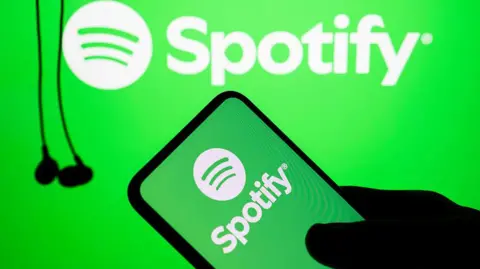
A song which has been streamed millions of times in Sweden has been banned from that country's music charts because it was created by Artificial Intelligence (AI).
Called I know, You're Not Mine - Jag vet, du är inte min - it is currently top of the Spotify playlist of Sweden's most popular songs. But the singer is a digital creation and the country's music industry body has blocked the track from its official chart listings.
It's a folk-pop song telling a melancholic story of lost love.
Backed by a finger-picked acoustic guitar melody, it weaves a tale of late-night heartbreak, broken promises and shattered hopes.
"Your steps in the night, I hear them go," sings the artist known as Jacub in a haunting voice.
"We stood in the rain at your gate and ran out and everything went fast. Now I know you are not mine, your promises came to nothing."
It quickly became Sweden's biggest song of 2026 so far, amassing more than five million Spotify streams in a matter of weeks, putting it at the top of the platform's Swedish Top 50.
However, journalists who began investigating Jacub's identity found that the artist had no significant social media profile, media appearances or tour dates.
When investigative journalist Emanuel Karlsten began digging deeper, he found that the song was registered to a group of executives connected to Stellar Music, a music publishing and marketing firm based in Denmark. Two of the individuals work in Stellar's AI department.
The producers – calling themselves Team Jacub – issued a lengthy email to Karlsten, insisting their creative process had been misunderstood.
"We are not an anonymous tech company that just 'pressed a button,'" they wrote.
"The team behind Jacub consists of experienced music creators, songwriters, and producers who have invested a lot of time, care, emotions, and financial resources."
They described AI as a "tool" or an "assisting instrument" within a "human-controlled creative process". To Team Jacub, they said, the five million Spotify streams were proof of the song's "long-term artistic value."
As to whether Jacub was a real person, Team Jacub gave a philosophical response.
"That depends on how you define the term," they said.
"Jacub is an artistic project developed and carried by a team of human songwriters, producers, and creators. The feelings, stories, and experiences in the music are real, because they come from real people."
That response has not impressed the IFPI Sweden music industry organisation, which has blocked the song from appearing in the country's official national charts.
"Our rule is that if it is a song that is mainly AI-generated, it does not have the right to be on the top list," said Ludvig Werner, head of IFPI.
Sweden is positioning itself as a global laboratory for the AI economy, amid concerns that AI could cut revenues to the country's music creators by up to a quarter within the next two years.
Music rights society Svenska Tonsättares Internationella Musikbyrå (STIM) launched a licensing system last September, allowing tech firms to legally train their AI models on copyrighted works in return for royalty payments.
At the launch, Lina Heyman from STIM described the framework as "the world's first collective AI licence". She said it would "show that it is possible to embrace disruption without undermining human creativity."
Sweden's chart ban on Jag vet, du är inte min is tougher than the approach taken by international organisations like Billboard, regarded as the world authority on music rankings.
AI-generated tracks have featured in some of its specialist charts. Billboard says that its charts reflect the tastes of listeners. Tracks qualify if they meet its criteria for sales, streams and airplay, even if they have been generated by algorithms.
Bandcamp, a platform known for supporting independent artists, has taken a stricter position, however.
It has prohibited music that is "generated wholly or in substantial part by AI." That includes tracks composed or produced by AI or using voice clones.
AI-generated music is forecast to explode in the coming years into an industry worth billions of pounds. As the needle drops on a new era of digital music creation, the controversy in Sweden over Jacub suggests that for now at least it is human musicians not machines who still call the tune.
Female artists (and Oasis) drove UK music sales in 2025
Spotify Wrapped is out: Bad Bunny is world's top artist, who's yours?
Everything you need to know about Spotify Wrapped
How to identify AI-generated videos online
BBC Verify shares tips and tricks on how to spot AI-generated videos circulating online.

New office for AI to 'explore opportunities'
A Manx Office for Artificial Intelligence will empower people to use the technology, its head says.
AI will destroy jobs if not controlled, Khan warns
The mayor says AI could "usher in a new era of mass unemployment, accelerated inequality" if not used correctly.
Matthew McConaughey trademarks iconic phrase to stop AI misuse
The Oscar-winning actor has trademarked several phrases, including "Alright, alright, alright" from the cult classic film, Dazed and Confused.
X to stop Grok AI from undressing images of real people after backlash
Grok will no longer allow users to remove clothing from images of real people in jurisdictions where it is illegal.
The BBC is in multiple languages
Copyright 2026 BBC. All rights reserved. The BBC is not responsible for the content of external sites. Read about our approach to external linking.
相關文章