

AI生成內容氾濫 催生虛構期刊的創紀錄請求
被稱為「AI Slop」的AI生成內容氾濫,正導致對虛構或不存在的科學期刊的請求創下紀錄。此趨勢凸顯了學術出版和AI生成研究驗證方面的挑戰。
December 8, 2025
2 min read
AI Slop Is Spurring Record Requests for Imaginary Journals
AI Slop Is Spurring Record Requests for Imaginary Journals
The International Committee of the Red Cross warned that artificial intelligence models are making up research papers, journals and archives
By Dan Vergano edited by Claire Cameron
Alexander Spatari/Getty Images
Join Our Community of Science Lovers!
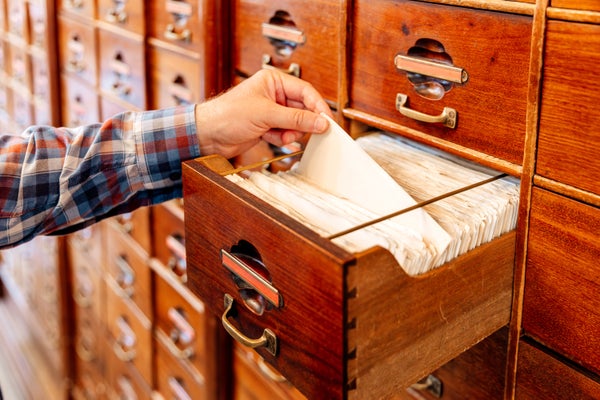
Never heard of the Journal of International Relief or the International Humanitarian Digital Repository? That’s because they don’t exist.
But that’s not stopping some of the world’s most popular artificial intelligence models from sending users looking for records such as these, according to a new International Committee of the Red Cross (ICRC) statement.
OpenAI’s ChatGPT, Google’s Gemini, Microsoft’s Copilot and other models are befuddling students, researchers and archivists by generating “incorrect or fabricated archival references,” according to the ICRC, which runs some of the world’s most used research archives. (Scientific American has asked the owners of those AI models to comment.)
On supporting science journalism
If you're enjoying this article, consider supporting our award-winning journalism by subscribing. By purchasing a subscription you are helping to ensure the future of impactful stories about the discoveries and ideas shaping our world today.
AI models not only point some users to false sources but also cause problems for researchers and librarians, who end up wasting their time looking for requested nonexistent records, says Library of Virginia chief of researcher engagement Sarah Falls. Her library estimates that 15 percent of emailed reference questions it receives are now ChatGPT-generated, and some include hallucinated citations for both published works and unique primary source documents. “For our staff, it is much harder to prove that a unique record doesn’t exist,” she says.
This is not the first time AI has been caught making up false citations. The ICRC recommends that people consult online catalogs or references in existing published scholarly works to find references to real studies instead of assuming anything cited by an AI is real, no matter how authoritative it might sound. The Library of Virginia will be asking researchers to vet their sources for these requests, Falls says, and to disclose if a source originated from AI. “We’ll likely also be letting our users know that we must limit how much time we spend verifying information.”
Dan Vergano is senior editor, Washington, D.C., at Scientific American. He has previously written for Grid News, BuzzFeed News, National Geographic and USA Today. He is chair of the New Horizons committee for the Council for the Advancement of Science Writing and a journalism award judge for both the American Association for the Advancement of Science and the U.S. National Academies of Sciences, Engineering, and Medicine.
It’s Time to Stand Up for Science
If you enjoyed this article, I’d like to ask for your support. Scientific American has served as an advocate for science and industry for 180 years, and right now may be the most critical moment in that two-century history.
I’ve been a Scientific American subscriber since I was 12 years old, and it helped shape the way I look at the world. SciAm always educates and delights me, and inspires a sense of awe for our vast, beautiful universe. I hope it does that for you, too.
If you subscribe to Scientific American, you help ensure that our coverage is centered on meaningful research and discovery; that we have the resources to report on the decisions that threaten labs across the U.S.; and that we support both budding and working scientists at a time when the value of science itself too often goes unrecognized.
In return, you get essential news, captivating podcasts, brilliant infographics, can't-miss newsletters, must-watch videos, challenging games, and the science world's best writing and reporting. You can even gift someone a subscription.
There has never been a more important time for us to stand up and show why science matters. I hope you’ll support us in that mission.

Thank you,
David M. Ewalt, Editor in Chief, Scientific American
Subscribe to Scientific American to learn and share the most exciting discoveries, innovations and ideas shaping our world today.
Scientific American is part of Springer Nature, which owns or has commercial relations with thousands of scientific publications (many of them can be found at www.springernature.com/us). Scientific American maintains a strict policy of editorial independence in reporting developments in science to our readers.
© 2025 SCIENTIFIC AMERICAN, A DIVISION OF SPRINGER NATURE AMERICA, INC.ALL RIGHTS RESERVED.
相關文章