

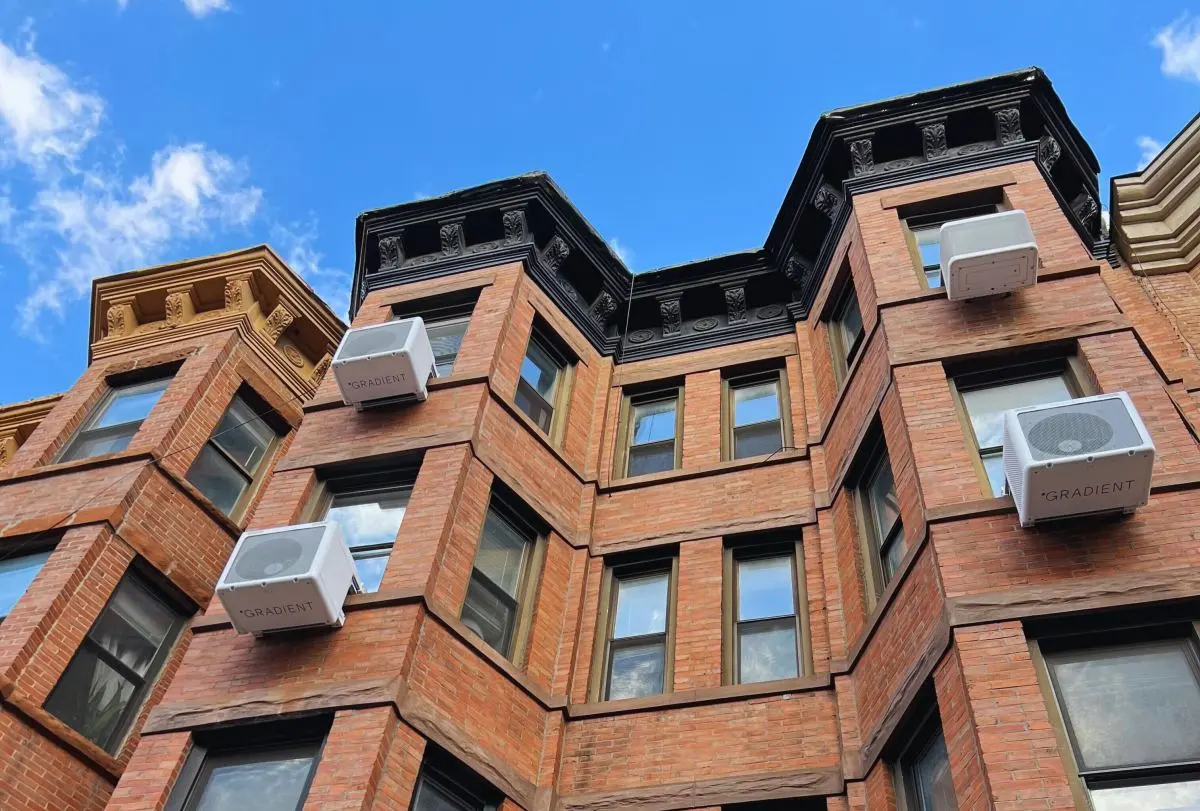
Gradient 暖氣機獲得智慧功能,助力舊建築改造
Gradient 推出了名為 Nexus 的新智慧軟體,用於其馬蹄形暖氣機,使其能夠在多戶住宅建築中相互連接。這項創新旨在提高舊建築的舒適度並促進其暖通空調系統的升級,特別針對經常被忽視的多戶住宅領域。


Topics
Latest
AI
Amazon
Apps
Biotech & Health
Climate
Cloud Computing
Commerce
Crypto
Enterprise
EVs
Fintech
Fundraising
Gadgets
Gaming
Government & Policy
Hardware
Layoffs
Media & Entertainment
Meta
Microsoft
Privacy
Robotics
Security
Social
Space
Startups
TikTok
Transportation
Venture
More from TechCrunch
Staff
Events
Startup Battlefield
StrictlyVC
Newsletters
Podcasts
Videos
Partner Content
TechCrunch Brand Studio
Crunchboard
Contact Us

Gradient’s heat pumps get new smarts to enable old building retrofits
New York City and others like it are filled with old buildings that are for the most part fine, except they’re not all that comfortable to live in. Built in an era when massive boilers were cutting edge technology, the buildings are usually too hot or too cold, but seldom just right.
A string of companies are trying to rectify that using clever horseshoe-shaped heat pumps. Superficially, they’re similar to window air conditioners, except they don’t block the view and they can heat as well as cool.
Gradient makes one of those heat pumps, but now it’s adding a twist: in multifamily buildings, it can link every one of its window units together. The startup shared exclusive details about the new Nexus software and service with TechCrunch.
“Multifamily buildings are an ignored sector,” Vince Romanin, chief technology officer at Gradient, told TechCrunch. “It’s a place where we can do better for the user.”
The startup is mostly targeting old buildings that need HVAC upgrades. Gradient has worked with the New York City Housing Authority to install its heat pumps in public housing, and it ran a pilot in Tracy, California, in a newer two-story affordable housing complex. It’s also talking with colleges and universities, many of which have dorms that weren’t built with hot autumn weather in mind.
Old buildings often have one electric meter, which can tempt residents into overusing their heating or air conditioning. Nexus gives some control back to building managers. They can set guardrails to prevent people from overusing the heat or AC — either intentionally or otherwise — while still allowing them to be comfortable. In one instance, a building manager set the heating limit at 78˚ F, and the next day energy consumption dropped by a quarter.
Romanin said Gradient’s heat pumps are the “lowest cost option” for old buildings with boilers that are reaching end of life, a common occurrence in New York City. As a bonus, units that previously only had a steam radiator now get air conditioning, future proofing the units against worsening heat waves.
TechCrunch Founder Summit 2026: Tickets Live
TechCrunch Founder Summit: Tickets Live
By installing a window unit rather than a minisplit, retrofits can happen within hours. They also don’t require electrical upgrades, Romanin said. In buildings with old electrical wiring that can’t support a full 12 amp load on a single outlet, Nexus can reduce the draw, said Mansi Shah, senior vice president of product and software at Gradient.
That strategy can extend beyond the building too. When the grid is overwhelmed by demand, which can happen on hot summer days, Gradient is working on a way to dial back its heat pumps while still maintaining occupant comfort. By using information about the building along with feedback from sensors in the heat pumps, the company hopes to predict which units can reduce their air conditioning demand, like those on the shady side of a building. That sort of demand response can help the grid serve more heat pumps without requiring costly upgrades.
“There’s a lot of people who said when we electrify everything, the grid won’t handle it,” Romanin said. “I think that it is very possible to electrify everything and make the grid better, make the grid’s job easier, and make electrons cheaper.”
Topics

Senior Reporter, Climate
Tim De Chant is a senior climate reporter at TechCrunch. He has written for a wide range of publications, including Wired magazine, the Chicago Tribune, Ars Technica, The Wire China, and NOVA Next, where he was founding editor.
De Chant is also a lecturer in MIT’s Graduate Program in Science Writing, and he was awarded a Knight Science Journalism Fellowship at MIT in 2018, during which time he studied climate technologies and explored new business models for journalism. He received his PhD in environmental science, policy, and management from the University of California, Berkeley, and his BA degree in environmental studies, English, and biology from St. Olaf College.
You can contact or verify outreach from Tim by emailing [email protected].

Tickets are live at the lowest rates of the year. Save up to $680 on your pass now.Meet investors. Discover your next portfolio company. Hear from 250+ tech leaders, dive into 200+ sessions, and explore 300+ startups building what’s next. Don’t miss these one-time savings.
相關文章