

藝術、金錢與AI
作者回顧了撰寫第一本小說的個人歷程,以及親友出乎意料的正面迴響,並引出了關於創意作品商業化的初步思考,預示著未來將探討AI的相關議題。

Art, Money, and AI
I wrote my first novel in 2009, fulfilling a lifelong dream. That dream was simply this: write a novel. It wasn’t to get a novel published. I wasn’t to get people to read the novel. I never dreamt of making money from my writing. I was just an avid reader from my Dr. Seuss days, fell in love with science fiction when I was eleven, and spent the next two decades dreaming of writing my own novel.
Having finally done it, I was presented with a colossal “now what?” There was a novel on my laptop that didn’t exist before. I went to Kinkos and printed it out, and now there was a book in a cardboard box that didn’t exist before. Also: it was a really good book, at least to me. I’d read it a dozen times while revising it, and I loved it more each time. The characters were interesting, the plot propulsive. The ending was both a shock but also logical and satisfying. And oh boy did I have a sneaky cliffhanger at the end!
A few friends and family members heard I’d written a book and were curious. So I emailed it around to folks. My cousin Lisa. My mom and my sister. A friend I only knew online. This is where things get a little warped, because the feedback I got wasn’t just “Hey, this is a good book from someone I only know as a computer nerd and a yacht captain,” it was: “Yo, this is better than the last few books I paid money for. You should publish it. How come Oprah isn’t talking about this? You should be a bestselling author. Where’s the sequel?”
I very clearly remember what it felt like to write my second book, Molly Fyde and the Land of Light. It was different from my first. For one thing, I now knew I could do it. I also had established characters and a universe to draw from. But the biggest difference is that I had an audience. I knew readers (only a handful, of course) who were waiting to read more. And this created a tension in my creative soul that I wrestle with to this day. It’s the tension between writing and authoring.
I wanted to write novels because I’ve always enjoyed writing, and I love novels. I’ve never wanted to become an author, which is probably why I still don’t think of myself as one. I just like writing. I’m enjoying writing this blog post right now. I have a general idea of what I want to say (I’ve been thinking about this blog post for several months), and I think I know how to arrange a sequence of events to lead you through my thoughts in a clear and engaging manner. It’s a puzzle, and my brain enjoys it.
But the tension between writing and authoring gets intense, so let me explain it a little. Writing is the hobby. Authoring is the profession. My mother is a gardener, but she doesn’t dream of becoming a farmer and taking baskets of goods to the market on Saturdays to supplement her income. My sister is a knitter, but she doesn’t dream of starting a clothing label and opening a pop-up. Most hobbies do not have a clear pathway to income, and so they remain pure hobbies for the vast majority of people who enjoy them.
Writing novels is not one of those hobbies, and the reason is pretty simple: duplication. If my mom grew a perfect tomato and could copy/paste it a billion times and send it to others through a strand of copper, she’d be a billionaire overnight. We are all looking for the perfect tomato. But they take time and aren’t easy to reproduce. The same goes for my sister knitting the best sweater ever. The work required to create enough sweaters to pay your bills is similar to other jobs. It’s a lot. And yarn ain’t cheap.
But sitting there, looking at a novel on a hard drive, knowing you can make infinite copies that weigh nothing and travel at the speed of light, gets you thinking. Hey, maybe I should do some authoring as well as some writing. Maybe I can make money at this. Maybe Oprah should know my name.
When I sit down to write, the only way I can stay in the writing zone and out of the authoring zone is to remind myself that nobody will ever read what I’m writing. I probably won’t publish it, I’ll keep it for myself (like the 5th Molly Fyde book, or thousands of blog posts over the years, all sitting in draft but fully realized and easily publishable). Often, I choose to write something in order to sabotage my career trajectory. A sequel to WOOL without the character people love most. A zombie book so revolting nobody can finish it. A romance novel about shell collecting. Anything that interests me and avoids the market.
But here’s the great contradiction that has guided my career as a writer: I’ve fought like mad over the years to make sure people on the authoring track get paid. A lot of time I could’ve spent writing the next formulaic sequel to make big bucks, I spent defending self-publishing in order to lower the stigma that was keeping more artists from sharing their works. And I spent gobs of time working with Data Guy on our Author Earnings project to show folks in this industry that self-publishing was a viable career choice. I’ve promoted other authors, edited anthologies, steered media away from myself and toward friends, all to try and help others get paid usually in lieu of me.
A couple of the more extreme examples of my lack of concern for the income-generating authoring side of things: when other writers asked if they could write Silo fan-fiction, I not only gave them my blessing, but I told them to self-publish the stories, charge money for them, and keep 100% of the profits. I also cut my agent into my self-publishing income for my most popular works, giving her 15% for something she didn’t help me publish, because she was supporting my decision to remain self-published when it was better for me. And so I figured it should also be more lucrative for her.
I didn’t do these things because I hate money. But I was able to do them because I don’t love money either. It’s not something to brag about, but I’ve lived a weirdly simple life. I moved onto a small sailboat in college that I paid ten grand for. It was my home for five years, often at anchor where I paid no rent (and also had no shower, no bathroom, no refrigeration, and no air conditioning). When I had enough money to buy a house, I bought a tiny one. Three of my homes over the next decade were right around 1,000 square feet. One was closer to 800 square feet. This was way before social media, van life hashtags, and “tiny homes.” I just didn’t want to be in a debt trap, and what others thought of me was never important. Shelter, food, health. In that order.
I think all of the above is necessary prelude to me saying: AI writing doesn’t bother me.
Will I use AI in my own writing? Never. I’ve been early and clear on this. I won’t even use it to look for typos or to suggest edits. Because I’m not creating a product, I’m doing something for my own pleasure, like working a crossword. I also don’t go to a website for the answer to the crossword and then put those answers into today’s puzzle. But I’m sure there’s someone out there who does. To each their own.
People are going to purchase AI-generated books and enjoy them. It’s already happening. Authors might claim their anger is over the theft of their works, but somehow I doubt that if AI models had been trained on works in the public domain, of which there are more than enough to get the same results, that magically all these angry authors would be totally cool with AI writing. “Oh, you didn’t sample any works currently protected by copyright? In that case, good luck with all your AI-generated books, and we wish you the best!” Yeah, I don’t think so. The anger is more visceral than that. It isn’t the theft that rankles, it’s the threat to future income.
The authoring brain goes nuts over AI generated writing. The writing brain goes: “what’s the point?”
The writing brain is bemused or ambivalent. It finds joy in writing and sees AI writing not as a threat but as something completely different, not the same game, not in the same universe. So there’s no threat. If a person wants to create a book entirely with AI, the most a writer brain might feel is the confusion over why someone would want to deprive themselves of the unique thrill of noodling it on their own. But an enlightened writer might realize that not everyone is looking for that thrill. Some people just want to read a book that doesn’t already exist, and however it gets created is not important to them. The book is the thing. Not the process.
The authoring mind sees a book where previously there hadn’t been a book, and now someone has robbed them of a sale. There’s money they would’ve made were it not for this existential threat to them making more money. It’s my mom getting mad that other people are growing tomatoes, my sister getting angry in her living room realizing someone else in another living room is also knitting. These are not healthy thoughts, and to be clear, my mother and my sister never think such things.
But oh, the same authors who were angry at me for self-publishing are now also angry at AI companies. The “tsunami of shit” from back in my day has become “AI slop” in this day. The threat is the same, and it’s an authoring threat. It’s not a writing threat. Nothing can ever stop anyone from writing except themselves.
Do I have a preference over a human writer making money vs a big tech company making money? Of course. I’m part of the Anthropic lawsuit. I think they should have used public domain works or generated their own training data (heck, pay authors to write sample chapters and books for less than the lawsuit is costing you). I’ve devoted quite a bit of my time and energy to helping human writers get paid, so my preference is impossible to doubt. But I also prefer books over TV and film, and I don’t make it my personality to deride others for however they get their entertainment.
The threat to book-reading has been social media for over a decade now. The threat to authors has often been publishers more than technology. The threat to writers has never existed and will never exist. Nothing is stopping you from growing vegetables or knitting a sweater. But something changes when you have that manuscript and suddenly words like money, bestselling, and Oprah pop into your head.
I have friends who make a living with their photography, and some of them have become all-consumed with their AI rage. Most of their social media posts are now lambasting those who generate images rather than going out to take them. The threat isn’t that someone is going to force them to use this new technology; the threat is that someone isn’t going to pay them for their art. All the complaints come in the guise of craft, but the source of the complaints is financial. It would be healthier for all of us if we were at least honest about that. Honest with ourselves, first and foremost.
The dream of becoming a full-time writer and supporting yourself with novels was always nearly impossible. And now it’s getting even harder. And that sucks, more than it’s always sucked. It’s difficult because not enough people (in my biased opinion as an avid reader) like to read books. It sucks because school unnecessarily teaches children to hate books at a young age (math, history, and science should not be taught from book-shaped things, and classics should be avoided until college). It sucks because publishers take too much of the cut and waste it on frivolous things. It sucks that healthcare isn’t even an option for successful, full-time writers. It sucks that a hobby that brings so much joy to so many people is so little rewarded. That’s not an AI thing. It’s always been this way and moving ever more that way.
There’s a near future where young readers will have stories created just for them. Where many people will read an individually-tailored book that no one else will ever read. And there will be a huge contingent of authoring minds out there who would vastly prefer that we all purchase the latest award-winning novel that nobody actually finishes rather than millions of people read and enjoy a one-off story written by a token-prediction machine.
I still don’t think of myself as an author, but I’ll always consider myself a writer and an avid reader. And for me, the millions of people reading AI stories late into the night when they have school the next day, or reading under their desks at the risk of having their device taken away by the teacher, are nearer and dearer to my heart than someone who is just in it for a buck. Writing for money is fine, I guess. I’ve fought for people to have that right. But if that’s the main goal, then the difference between that writer and the tech company is more similar than we’re willing to admit. It’s a pursuit of profits. We can stop pretending it’s about art at all.
7 responses to “Art, Money, and AI”

Here’s the thing about “AI writing” (I am also a writer and author.)
Meat-based fine artists “training” themselves on other artist’s works has been going on since forever. In fact, not only has it been the standard model for artistic training, it’s been taught as a methodology and actively encouraged. No established artist has EVER said to a budding artist, “Hey, I never gave you permission to study my style, make copies for training purposes, or produce original works that mimic it!”
Of course, scale (and talent) matters. An AI writer can “train up” in minutes a style it might take a meat writer decades to master, then churn out endless respectable copies on demand. And that tilts the market in a way no individual could ever hope to.
So yeah, at the end of the day it’s all about munney.
And I get that and yeah, that definitely needs redress.
But no copyright has ever established any right whatsoever to something as amorphous as “style.” In other words, it has never been a thing.
Until it was.
And quite frankly, I don’t see any solution. Who own’s Elmore Leonard’s distinct style? Or Picasso’s? Or Beethoven’s? What copyright exactly is being violated? But the real question here is (stop here if you see this coming) Whose Ox is Being Gored?
As they also say (I’m so full of clichés today) the good is the enemy of the great.
I don’t believe AI will EVER produce anything great. For that you need that old human connection.
But good? Damn. I’ve read some good AI writing, and it stresses me the f*ck out.
I don’t know the answer here.

Guess I’m a writer then, not an author, since I put the completed goal of publishing a novel on Amazon right beside the goal of doing an engine swap on a Chevy truck using a come-a-long and an oak tree. Each goal felt great when reached. Cue up “Simple Man”.

Love it! Need more people like you vs angry, envious and greedy that seems to be the norm. Thank you for your art!

An artist looses himself in his work…the creativity and joy of finishing a piece which can be shared is tremendously satisfying and curiously soul destroying. I totally enjoy the way you write. And congratulations for not yielding to the mass market treadmill of publication houses.

Thanks for the post. I’d like to say that I’m for whatever gets folks reading- the thought of kids staying up way too late to finish a book, (I finished Gone with the Wind and stumbled to the kitchen the same moment my mother was putting on the coffee pot in the morning) to me, is thrilling, even if it’s AI generated, however, there is more to “authoring” than that. Stepping away from the monetary piece, we still have the “going on Oprah” piece that seems important, not for the author’s perceived fame, but for the reader community. When we are reading the same book, we talk about it, we go to events, we post about it online, and recommend it to others and get recommendations ourselves. We grow and reinforce our community networks. With AI generated, individually bespoke content, as intriguing as it sounds, the community aspect is removed, and we the readers are poorer for it. My best friend (and fellow avid Sci Fi reader) introduced me to your work (Silo), then we read Molly Fyde and your other works together, talked about them, recommended them to other friends, reinforcing our social bonds through the shared experience of reading your work.

Provocative thinking, as usual, Hugh.
Thanks for giving us permission, years ago, to publish our own tales in your world.
Who could have imagined a little short story that begins by sending Holston outside would lead to the international phenomenon SILO has become?

Write on !
Leave a Reply Cancel reply
Your email address will not be published. Required fields are marked *
Comment *
Name *
Email *
Website
Save my name, email, and website in this browser for the next time I comment.
Notify me of follow-up comments by email.
Notify me of new posts by email.
Δdocument.getElementById( "ak_js_1" ).setAttribute( "value", ( new Date() ).getTime() );
Blog Updates
Type your email…
subscribe
Signed Books! (Limited Supply)
Writing Insights Series
About Me
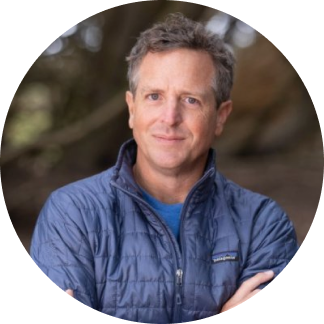
New York Times bestselling author of over a dozen novels. SILO out now on AppleTV+ Beacon 23 on MGM+!
RECENT POSTS


Recent Posts
Follow Me
Tumblr
YouTube
Blog updates
Type your email…
subscribe
© 2025
Hugh Howey
All Rights Reserved.
Proudly powered by WordPress. Hosted by Pressable.
相關文章