

Cursor執行長利用AI打造瀏覽器,但它真的有效嗎?
Cursor執行長Michael Truell及其團隊利用數百個GPT-5.2 AI代理,從零開始自主建構了一個功能齊全的網頁瀏覽器,產出了超過三百萬行程式碼。此實驗展示了AI在協調複雜編碼專案方面的日益增強的能力,儘管初期嘗試面臨協調上的挑戰。


Cursor CEO Built a Browser using AI, but Does It Really Work?


.avif)
https://www.finalroundai.com/blog/cursor-ceo-browser-made-using-ai
A new experiment by Cursor CEO demonstrates that AI can now autonomously coordinate massive coding projects, even building a browser.
Browser made using AI Agents
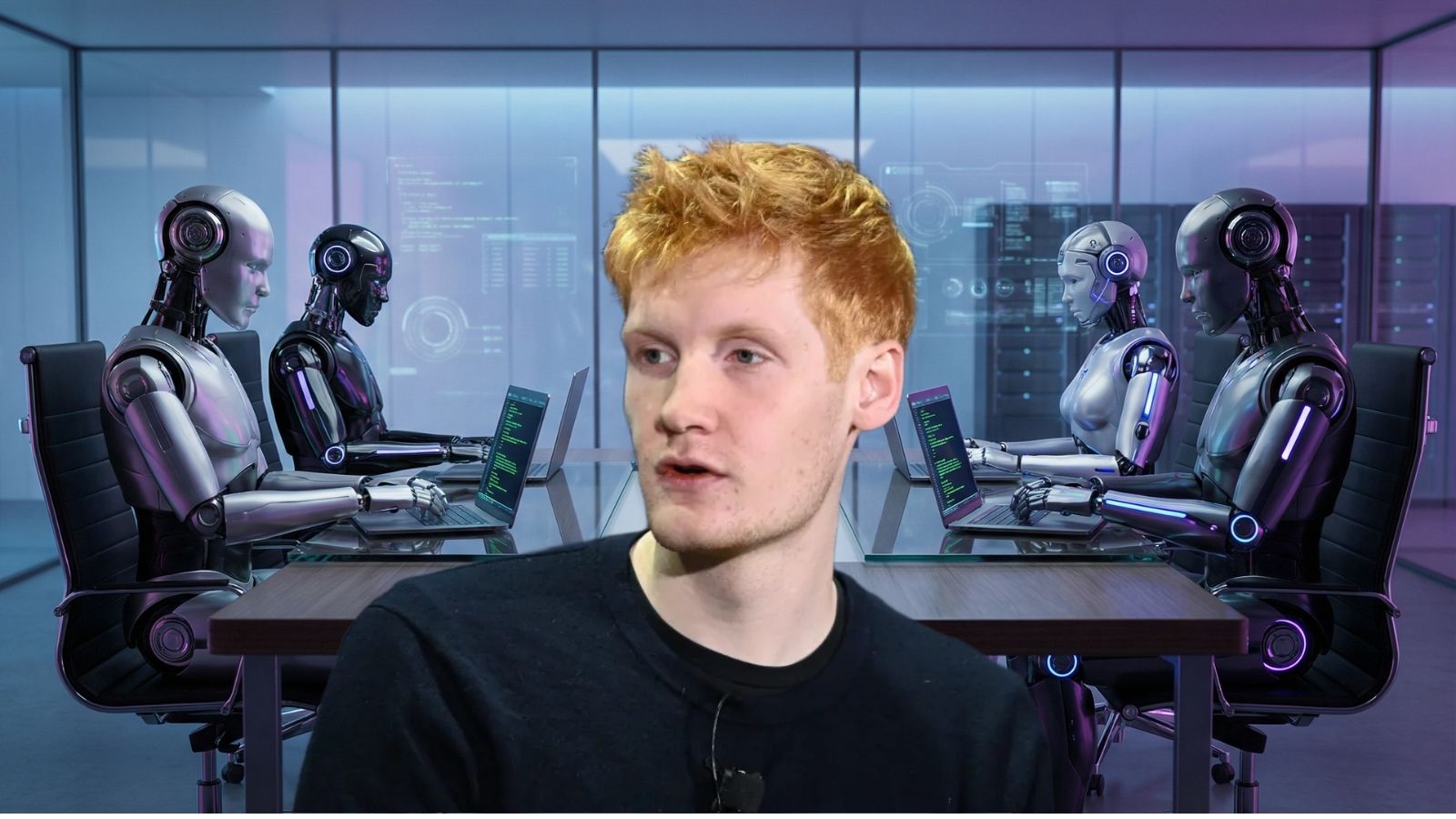
Michael Truell, the 25-year-old CEO of Cursor, and his team coordinated hundreds of GPT-5.2 agents to build a fully functional web browser from scratch.
AI agents worked “uninterrupted” for an entire week. The result? Over 3 million lines of code across thousands of files.
The secret was OpenAI’s GPT-5.2, a model specifically designed for extended autonomous work. GPT-5.2 was praised for its AI coding capabilities when it was released in December 2025.
According to Truell, GPT-5.2 excels at precisely what this project demanded: staying on task, implementing features completely, and working autonomously for extended periods.
The project was to build a fully new web browser, with its own rendering engine and core subsystems.
The hardest part was getting hundreds of AI agents to work together without everything turning into a mess.
Initial attempts failed. When they gave all agents equal status and let them self-coordinate, the AI agents became paralyzed by indecision or became so risk-averse that they only made trivial changes.
Things started working when they separated roles:
This hierarchical system solved the coordination problem.
In the end, they built a web browser from scratch, a project that typically takes experienced human developers months or even years to complete. The source code is publicly available on GitHub.
The codebase includes fundamental browser components such as HTML parsing, CSS cascade and layout, text shaping, painting mechanisms, and even a custom JavaScript virtual machine.
Why is it getting appreciated?
A web browser might sound simple, but it’s one of the most complex pieces of software ever created.
Modern browsers:
All while remaining fast and stable.
The fact that AI agents could coordinate to build something this sophisticated is an achievement.
Although the browser remains far from matching Chromium or WebKit, Truell said it already renders simple websites quickly and largely correctly.
We need to understand that instead of stopping, throwing errors, and waiting for some human to fix it, it kept going. It debugged the issues on its own and moved forward.
Another interesting finding here was that GPT-5.2 outperformed Claude by keeping focus on multi-stage and complex tasks without human supervision.
But does it really work?
After making agents work 24x7, still Truell has to say: “It kind of works!”.
We built a browser with GPT-5.2 in Cursor. It ran uninterrupted for one week.It's 3M+ lines of code across thousands of files. The rendering engine is from-scratch in Rust with HTML parsing, CSS cascade, layout, text shaping, paint, and a custom JS VM.It kind of works! It… https://t.co/pHL5CgZCfK pic.twitter.com/jA6wDdwRif
Traditional browsers contain tens of millions of lines of code and took years of collective human effort to mature. Chromium has over 35 million lines of code. This AI-made browser is not even not 10% of them.
So, the browser is far from being production-ready software.
While the AI managed to crank out a bunch of code, there is skepticism about how effective that code actually is.
See, rendering a webpage is not the hard part. The real complexity of a modern browser lives in everything around it, including extensions, password managers, security, accessibility, crash handling, and thousands of edge cases.
None of that information is available here.
There is a problem with sustainability, too. Writing a million lines of code is one thing, but maintaining it is another. Fixing the remaining issues may take far longer than writing the initial code, in this case.
One developer on HackerNews even said trying to locate core components like the JavaScript engine or DOM implementation in the generated code is difficult.
Also, real developers were needed for planning this whole thing. The agents didn’t spontaneously decide how browsers should be designed. Humans defined goals, roles, and workflows.
And don’t forget that browsers are one of the most heavily documented software categories. Even if no code was directly copied, the model has effectively been trained on decades of work. Is it just an advanced case of “copy and paste”?
Bottom Line
The real work begins when they need to remove the “kind of”. They might have stopped the “experiment” after one week because continuing further simply wasn’t worth the cost.
So, as of right now, such AI builds are still experiments. There is a lot for AI to learn to make complex software, and whether it will be able to do that or not is still a question mark.
Still, Cursor now plans to integrate these multi-agent coordination techniques into its main product soon.
Upgrade your resume!
Create a hireable resume with just one click and stand out to recruiters.
Ace Your Next Interview with Confidence
Unlock personalized guidance and perfect your responses with Final Round AI, ensuring you stand out and succeed in every interview.
Related articles

"Godfather of AI" Geoffrey Hinton Says Tech Investment Can't Pay Off Without Destroying Jobs
Geoffrey Hinton says tech companies investing trillions in AI can only make money by eliminating human jobs.

Paramount Lays Off 1,600 Employees in Third Major Round of Cuts This Year
Paramount cuts 1,600 jobs in South America, the third major layoff round in 2025. Company targets 15% workforce reduction to save $3 billion under new CEO.

Godfather of AI Says “AI Will Destroy Jobs & Create Mass Unemployment”
Nobel Prize winner Geoffrey Hinton reveals why AI will create "massive unemployment," which tech CEO he trusts less between Musk and Altman, and how ChatGPT ruined his relationship.

US Unemployment Rate in 2025 Hits Highest Level in Four Years
The US unemployment rate in 2025 explains why joblessness is rising and how the labor market is changing this year.

Software Engineering Job Market Outlook for 2026
Here is our future outlook for the software engineering job market in 2026 and what developers can expect next.
OpenAI's Agent Builder - What Developers Are Saying After Testing
OpenAI launched Agent Builder as a game-changer for AI workflows, but software developers are finding broken integrations and bugs after hands-on testing.
Your trusted platform to ace any job interviews, craft the perfect resumes, and land your dream jobs.


Products
Resources
Support
Company
AI Tools
相關文章