

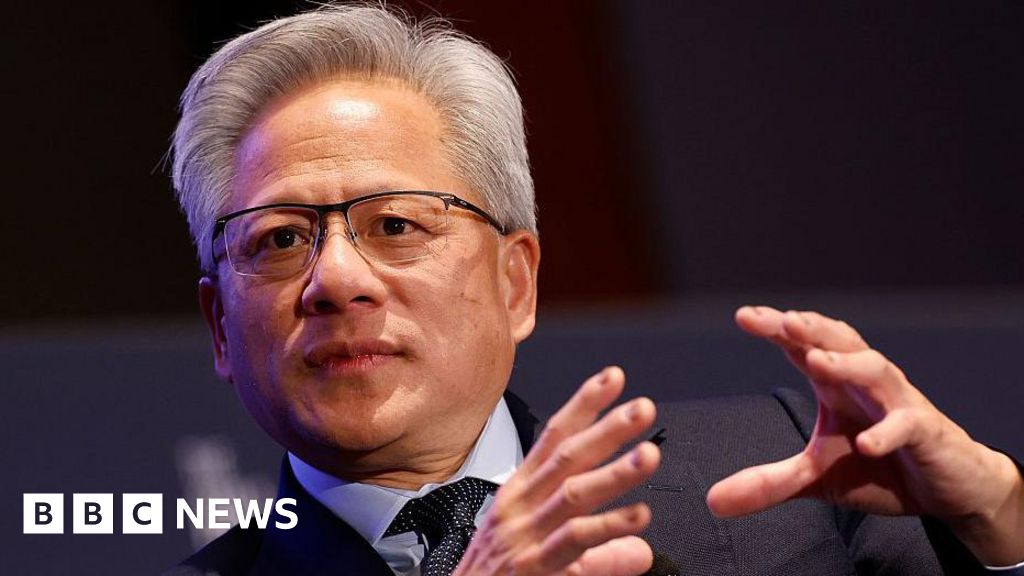
美國批准輝達先進AI晶片銷售予中國
美國政府已批准輝達(Nvidia)將其先進的H200人工智慧(AI)處理器銷售至中國,但設有條件限制,包括確保美國國內供應充足,並禁止用於軍事用途。此舉是在先前為防止中國科技和軍事取得優勢而實施限制之後發生的。
US approves sale of Nvidia's advanced AI chips to China

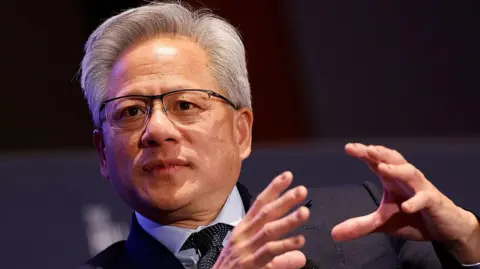
The US government has given chip giant Nvidia the green light to sell its advanced artificial intelligence (AI) processors in China, the Department of Commerce said on Tuesday.
The H200, Nvidia's second-most-advanced semiconductor, had been restricted by Washington over concerns that it would give China's technology industry and military an edge over the US.
The Commerce Department said the chips can be shipped to China granted that there is sufficient supply of the processors in the US.
President Donald Trump said last month that he would allow the chip sales to "approved customers" in China and collect a 25% fee.
Nvidia's spokesperson told the BBC that the company welcomed the move, saying it will benefit manufacturing and jobs in the US.
The Commerce Department's Bureau of Industry and Security said its revised export policy applies to Nvidia's H200 chips, as well as less advanced processors. Chinese customers must also show "sufficient security procedures" and cannot use the chips for military uses.
The H200 chip is a generation behind Nvidia's Blackwell processor, which is considered to be the world's most advanced AI semiconductor and remains blocked from sale in China.
Chinese embassy spokesman Liu Pengyu told the BBC on Wednesday that Beijing has consistently opposed the "politicisation and weaponisation of tech and trade issues".
"We oppose blocking and restricting China, which disrupts the stability of industrial and supply chains," he said. "This approach does not serve the common interests of both sides."
Nvidia has been caught in a geopolitical tug-of-war between the US and China - two sides of a global AI race.
Trump reversed the chip-selling restriction last July, but demanded that Nvidia pay a cut of its earnings from China to the US government.
Beijing then reportedly ordered its tech companies to boycott Nvidia's China-bound chips and prioritise semiconductors made domestically. That move was designed to bolster China's tech industry, though experts have consistently said that the country's chips still lag behind the US.
The US is taking a cut from chip sales to China - what does it mean?
How China is challenging Nvidia's AI chip dominance
Throughout 2025, Nvidia CEO Jensen Huang continually lobbied Washington to allow the sale of the firm's high-powered chips to China, arguing that global market excess is essential for America's competitiveness.
Some officials in the US, however, have expressed concerns that the chips would benefit Beijing's military and hurt America's progress in AI development.
While Beijing is likely concerned about domestic firms becoming over-reliant on Nvidia, local firms will be eager to secure H200 chips - at least until homegrown alternatives get better, said semiconductor analyst Austin Lyons.
Nvidia will also be happy to get any revenue from China, even if it comes at a lower margin due to the US government taking a cut of the sales, Lyons added.
Trump's "unique" proposal to collect a cut of Nvidia's sales could also set a precedent for his negotiations in other trade tariffs, said Marc Einstein from Counterpoint Research.
"It will be interesting to see if this tariff model expands to other sectors."
What tariffs has Trump announced and why?
China announces record $1tn trade surplus despite Trump tariffs
K-pop drum duet between Japan and South Korea's leaders caps off summit talks

School considers leaving X over AI content fears
Headteacher Jamie Barry says "we want to use the platform, but not at the expense of safety".

Government drops plans for mandatory digital ID to work in UK
There will still be digital checks on those starting a new job, but people will not need to hold a digital ID.

No 10 welcomes reports X is addressing Grok deepfakes
The use of the AI tool to digitally undress women has sparked a backlash as well as intervention from the government and regulator.
Amazon plans data centre at former power plant site
Amazon is awaiting planning permission to build four data centre buildings in Oxfordshire.

University opens new humanities innovation hub
The Digital Futures Lab looks at how emerging technologies can be used, including in research.
The BBC is in multiple languages
Copyright 2026 BBC. All rights reserved. The BBC is not responsible for the content of external sites. Read about our approach to external linking.
相關文章