


Ammobia聲稱已革新百年氨生產技術
新創公司Ammobia已成功募得750萬美元種子輪資金,以推廣其改良的氨生產Haber-Bosch製程,該公司聲稱此技術可降低高達40%的成本。此項創新有望超越氨在肥料的傳統用途,使其成為脫碳的重要潛力能源。


Topics
Latest
AI
Amazon
Apps
Biotech & Health
Climate
Cloud Computing
Commerce
Crypto
Enterprise
EVs
Fintech
Fundraising
Gadgets
Gaming
Government & Policy
Hardware
Layoffs
Media & Entertainment
Meta
Microsoft
Privacy
Robotics
Security
Social
Space
Startups
TikTok
Transportation
Venture
More from TechCrunch
Staff
Events
Startup Battlefield
StrictlyVC
Newsletters
Podcasts
Videos
Partner Content
TechCrunch Brand Studio
Crunchboard
Contact Us
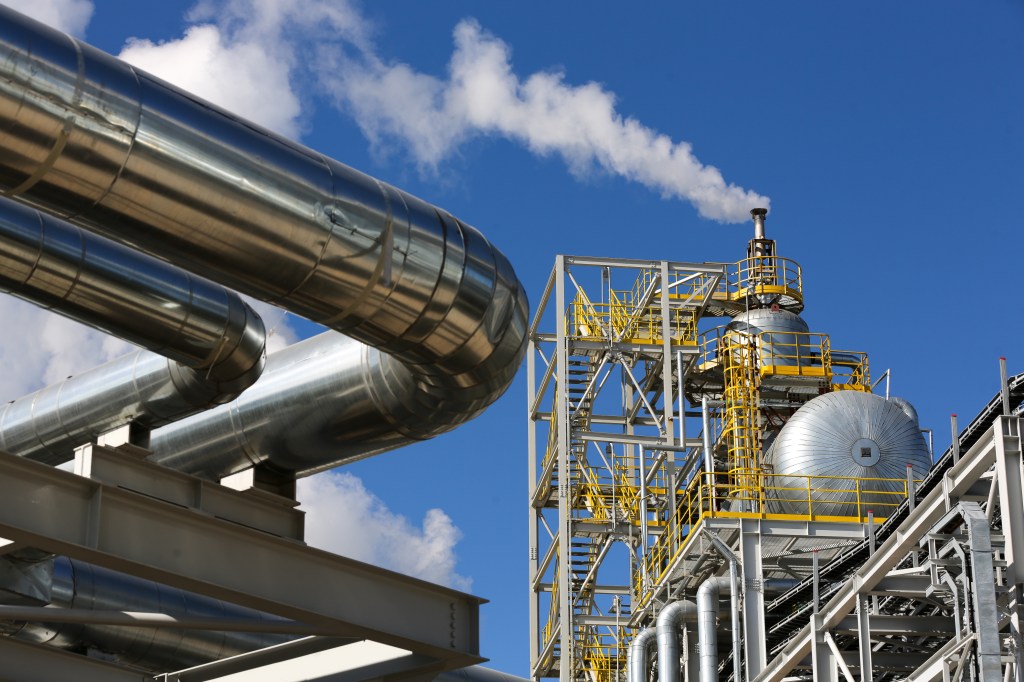
Ammobia says it has reinvented a century-old technology
Ammonia might be the world’s most under appreciated chemical. Without it, crops would go unfertilized and billions of people would starve.
Humans started making ammonia in large amounts just over a century ago, and since then the process used to make it, known as Haber-Bosch, hasn’t changed much. A new startup, Ammobia, says that it has tweaked the Haber-Bosch process to lower the cost by up to 40%.
To prove the technology works on a larger scale, Ammobia has raised a $7.5 million seed round, the company exclusively told TechCrunch. Investors include Air Liquide’s venture arm ALIAD, Chevron Technology Ventures, Chiyoda Corporation, MOL Switch, and Shell Ventures.
If the startup succeeds, it could pave the way for ammonia to be used beyond fertilizer.
Ammonia is viewed by some as an alternative to hydrogen to decarbonize a range of industries. Countries like Japan and South Korea have developed industrial and transportation roadmaps that rely on ammonia. Hydrogen, the other leading contender, isn’t as energy dense and its transportation infrastructure isn’t as well developed as ammonia.
“The big advantage of ammonia is that it’s much easier and more cost-effective to transport and store,” Ammobia co-founder and CEO Karen Baert told TechCrunch. “That opens up a range of opportunities.”
But those opportunities won’t amount to much if ammonia production doesn’t clean up its act. The Haber-Bosch process is one of the world’s big polluters, producing nearly 2% of global greenhouse gases.
To make ammonia, plants using Haber-Bosch employ an iron catalyst to force one molecule of nitrogen to react with three molecules of hydrogen. The reaction requires high heat (500˚ C) and pressure (around 200 bar or 2,900 psi) to sustain, both of which tend to be supplied by burning fossil fuels.
Fossil fuels also provide some of the gas needed as a feedstock. Nitrogen is easy to obtain — the gas makes up nearly 80% of Earth’s atmosphere — but most hydrogen used in ammonia production is made by using steam to break apart methane molecules (CH4) found in natural gas.
Ammobia’s process runs at around 150˚ Celsius cooler and at ten times lower pressure. As a result, plants that adopt the technology stand to produce less pollution, even if they don’t ditch fossil fuels.
The startup also says its process saves cost up front. Ammobia can use cheaper pumps and equipment because it doesn’t need to hit high temperatures and pressures.
That could give producers an edge. Because nearly every ammonia producer uses Haber-Bosch, they have typically had only two ways to reduce costs: find a cheaper source of heat or a cheaper source of hydrogen. In places like the U.S., few are cheaper than natural gas.
Ammobia isn’t seeking to change that right away. The startup emphasizes that its process works with any source of hydrogen or heat. But it does have a some key differences from traditional Haber-Bosch that could encourage cleaner sources of each.
Because Ammobia’s runs at lower pressure, it’s easier to ramp production up and down, which could allow renewable developers to take advantage of surplus electricity production to make cheap hydrogen and thus cheap ammonia.
“Our technology is very compatible with renewable energy, that leads to an additional cost reduction because you don’t need to store hydrogen or store electricity,” Baert said. “In these situations, we have the strongest cost advantage.”
The reduced temperature and pressure requirements also allow Ammobia to make its equipment smaller than a typical Haber-Bosch plant. Most ammonia facilities today generate between 1,000 to 3,000 tons per day, while Ammobia’s commercial-scale unit will produce 250 tons per day, Baert said. Customers that need more can install multiple units, she said.
Ammobia did not share details on how it tweaked Haber-Bosch to run at lower temperature and pressure, but there a few hints out there. The company has a patent pending on a reactor system that incorporates a sorbent to remove ammonia as it is formed to free up space on the catalyst for another reaction to take place. Researchers have also bee investigating non-iron catalysts, including manganese nitride, which use less energy to keep the chemical reaction going.
The startup has been operating a small unit for about a year, and the new funding will help the company build a pilot plant that contains all the features of the commercial model on a smaller scale, about 10 tons per day.
“With that modular approach, we can build projects faster, and we can start at a medium scale,” Baert said. “We see that a lot of customers are looking for that type of solution, and there’s no solution out there today.”
Topics

Senior Reporter, Climate
Tim De Chant is a senior climate reporter at TechCrunch. He has written for a wide range of publications, including Wired magazine, the Chicago Tribune, Ars Technica, The Wire China, and NOVA Next, where he was founding editor.
De Chant is also a lecturer in MIT’s Graduate Program in Science Writing, and he was awarded a Knight Science Journalism Fellowship at MIT in 2018, during which time he studied climate technologies and explored new business models for journalism. He received his PhD in environmental science, policy, and management from the University of California, Berkeley, and his BA degree in environmental studies, English, and biology from St. Olaf College.
You can contact or verify outreach from Tim by emailing [email protected].

Plan ahead for the 2026 StrictlyVC events. Hear straight-from-the-source candid insights in on-stage fireside sessions and meet the builders and backers shaping the industry. Join the waitlist to get first access to the lowest-priced tickets and important updates.
相關文章