
特斯拉停用 Autopilot 以推動其全自動駕駛軟體採用
特斯拉已停用其基本的 Autopilot 駕駛輔助系統,旨在提高其更先進的全自動駕駛(監督式)軟體的採用率。此舉是在一項裁決之後進行的,該裁決發現特斯拉在自動駕駛能力方面存在誤導性行銷。


Topics
Latest
AI
Amazon
Apps
Biotech & Health
Climate
Cloud Computing
Commerce
Crypto
Enterprise
EVs
Fintech
Fundraising
Gadgets
Gaming
Government & Policy
Hardware
Layoffs
Media & Entertainment
Meta
Microsoft
Privacy
Robotics
Security
Social
Space
Startups
TikTok
Transportation
Venture
More from TechCrunch
Staff
Events
Startup Battlefield
StrictlyVC
Newsletters
Podcasts
Videos
Partner Content
TechCrunch Brand Studio
Crunchboard
Contact Us
Tesla discontinues Autopilot in bid to boost adoption of its Full Self-Driving software
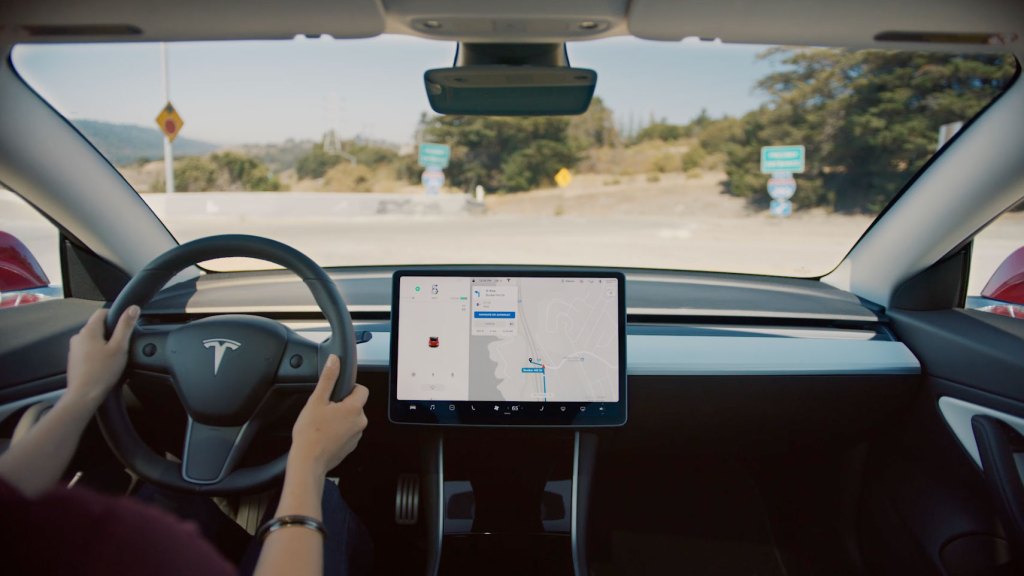
Tesla has discontinued Autopilot, its basic driver-assistance system, as the company tries to boost adoption of a more advanced version of the technology that it calls Full Self-Driving (Supervised).
The decision comes as the company faces a 30-day suspension of its manufacturing and dealer licenses in its largest U.S. market, California. A judge ruled in December that Tesla engaged in deceptive marketing by overstating the capabilities of Autopilot and FSD for years. The California DMV, which originally brought the case and has a say over the licenses, stayed the ruling for 60 days to allow Tesla to comply by dropping the Autopilot name.
Autopilot was a combination of Traffic Aware Cruise Control, which sticks to a designated speed while maintaining distance with cars ahead, and Autosteer, a lane-centering feature that could steer the car around curves.
Tesla’s online configuration site now states new cars now only come standard with Traffic Aware Cruise Control. It’s not clear if current customers are affected.
The decision comes one week after the company said that starting on February 14, it would stop charging a one-time $8,000 fee for the FSD software. After that, customers will only be able to access FSD through a monthly subscription of $99 — though Tesla CEO Elon Musk wrote in a post on Thursday that the subscription price will increase as the software’s capabilities improve.
Musk believes that Tesla’s newer cars will be capable of “unsupervised” driving, saying FSD advances will allow drivers to “be on your phone or sleeping for the entire ride.” In December, he said a new version of FSD allowed the former, though texting while driving is illegal in almost all states.
On Thursday, Tesla rolled out the first robotaxi versions of its Model Y SUVs in Austin, Texas that have no human safety monitoring personnel in the cars. Those vehicles are running a more advanced version of the company’s driving software, and are still followed by the company’s cars for supervision.
Tesla launched the beta version of its Full Self-Driving software in late 2020, but adoption has always lagged behind the expectations of executives like Musk. In October 2025, Tesla’s chief financial officer Vaibhav Taneja said only 12% of all Tesla customers had paid for the software. Hitting “10 million active FSD subscriptions” by 2035 is one of the key “product goals” required for Musk to receive the full payout of his new $1 trillion pay package. Tesla first introduced Autopilot in the early 2010s after talks broke down between Musk and Google to leverage the tech being developed by the search giant’s then-nascent autonomous driving division (which eventually got spun out into Waymo). Tesla made the driver assistance system standard on all of its vehicles in April 2019.
Across the decade-plus of Autopilot’s existence, Tesla struggled with communicating the software’s capabilities. The company often overpromised and made the tech seem more capable than it was, leading some drivers to become overly confident in its abilities, which in turn led to hundreds of crashes and at least 13 fatalities, according to the National Highway Traffic Safety Administration.
Topics

Sr. Reporter, Transportation
Sean O’Kane is a reporter who has spent a decade covering the rapidly-evolving business and technology of the transportation industry, including Tesla and the many startups chasing Elon Musk. Most recently, he was a reporter at Bloomberg News where he helped break stories about some of the most notorious EV SPAC flops. He previously worked at The Verge, where he also covered consumer technology, hosted many short- and long-form videos, performed product and editorial photography, and once nearly passed out in a Red Bull Air Race plane.
You can contact or verify outreach from Sean by emailing [email protected] or via encrypted message at okane.01 on Signal.

Tickets are live at the lowest rates of the year. Save up to $680 on your pass — and if you’re among the first 500 registrants, score a +1 pass at 50% off.Meet investors. Discover your next portfolio company. Hear from 250+ tech leaders, dive into 200+ sessions, and explore 300+ startups building what’s next. Don’t miss these one-time savings.
相關文章