

AI程式設計的成功關鍵是什麼?(4.6千個AI對話串分析)
對4.6千個AI開發者互動對話串的分析顯示,積極「引導」AI並提供具備上下文的提示是成功的關鍵預測因子,而非將修正視為失敗。數據也呈現出「建築師」和「高效操作員」等不同的高成功率用戶原型。
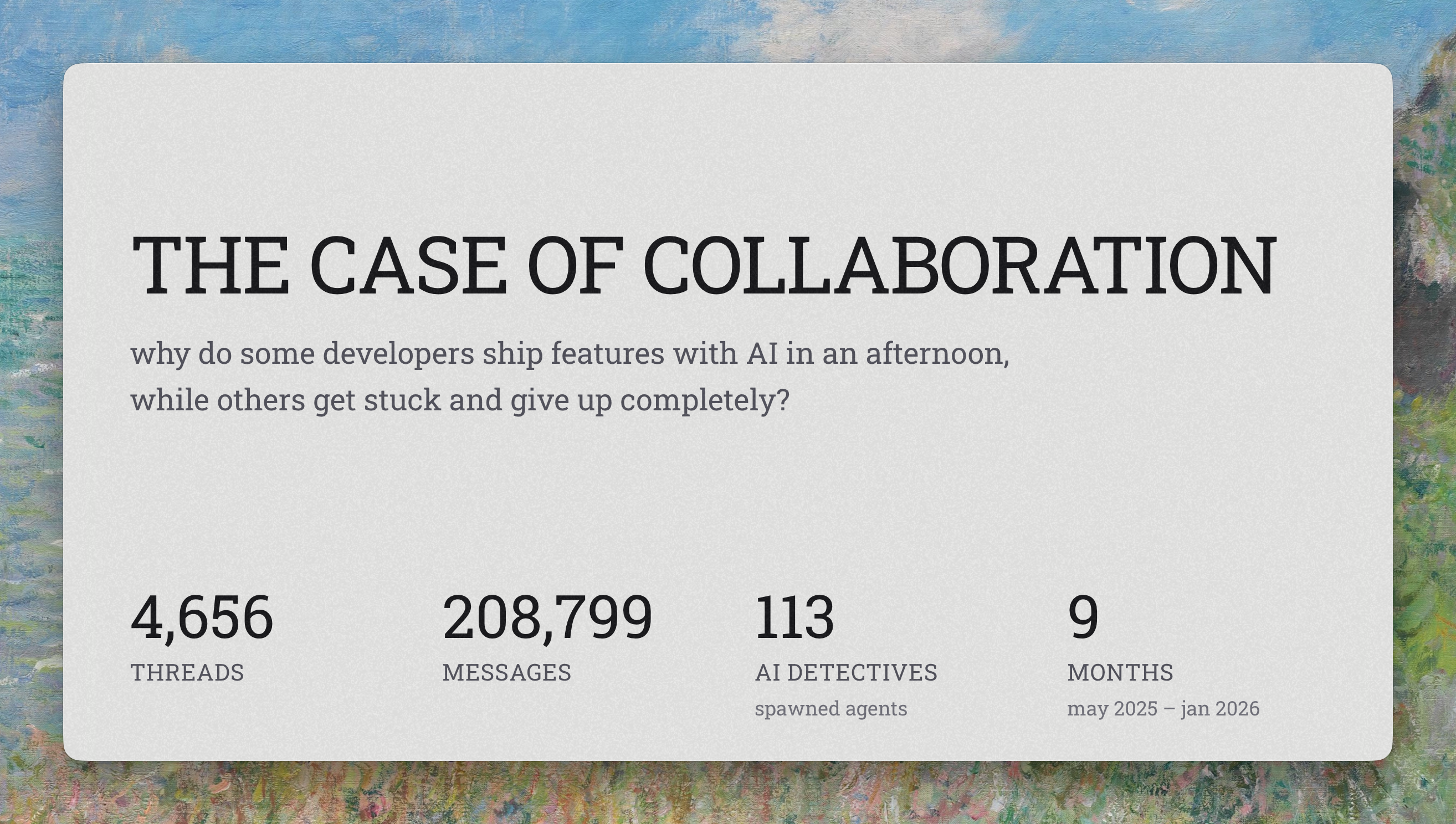
the case of collaboration
why do some developers ship features with AI in an afternoon, while others get stuck and give up completely?
the investigation
to find out, we needed data. a lot of data. we parsed nearly 209,000 messages between developers and their AI partners across an engineering team. but here's the twist—we didn't crunch these numbers ourselves.
we spun up over 100 AI agents to act as our private detective agency. they sifted through their own kinds of interaction logs to find the hidden patterns of what works and what doesn't.
the steering paradox
we all assume that if you have to correct the AI—what we call "steering"—then something's gone wrong. it feels like failure. but the data says otherwise.
success with high steering
success with none
correcting the AI isn't frustration—it's investment. users who steer are the ones who care enough to push back, to guide, to actually collaborate. they're the ones who get things done.
the anchor effect
the second clue was hiding in the very first message. we compared abstract prompts like "build me a login page" to anchored prompts—ones grounded in specific context.
success boost from including a file path in your first message
66.7% vs 41.8%
anchoring your request in the reality of your actual project is one of the single biggest predictors of success we found.
the power users
three distinct archetypes emerged from the data. each has ridiculously high success rates, but they get there in totally different ways.
the architect
82% resolution rate
writes massive first messages—4,000+ characters. front-loads everything: constraints, goals, full context. treats AI like a junior architect who needs a complete brief.
the efficient operator
67% resolution, lowest steering rate
asks questions instead of commands. "how should we approach this?" plus frequent small approvals keeps the AI perfectly on track with almost zero friction.
the marathon runner
86+ avg turns, hardest problems
runs the longest conversations by far. uses socratic method—constantly probing AI logic. superpower is sheer, relentless persistence.
the playbook
we distilled all power user habits into an actionable four-week plan.
context quality
always include file paths in your opener
approval cadence
give quick, frequent feedback
prevent steering
ask better questions up front
build persistence
don't give up on a thread too early
agents analyzing agents
this entire investigation wasn't just about AI collaboration—it was a perfect example of it. those 100+ AI detectives? they analyzed their own kinds of conversations to find success patterns.
which creates an incredible feedback loop: we used agents to analyze agents, gaining insights that will change how we work with agents—creating new data that can be analyzed again.
the key to success isn't just about what you ask. it's about engagement, persistence, and reflection.
explore the evidence
4,656 threads · 208,799 messages · 20 users · may 2025 – january 2026
analysis conducted by 113 spawned agents
相關文章